In 1965, Singapore was a small island with no farmland to speak of, no oil, no minerals, and not even enough fresh water for its own people. It had just been separated from Malaysia, and many observers doubted it could survive as an independent country. Six decades later, it is one of the richest nations in the world, home to one of the busiest ports on the planet and a leading global financial centre.
Thank you for reading this post, don't forget to subscribe!How did that happen? There was no single miracle. Singapore’s economic history is a story of geography used wisely, a government obsessed with long-term planning, open doors to foreign investment, and heavy investment in people. In this guide, we walk through each stage of the journey in plain language, so you can understand what Singapore did and which lessons other countries can realistically borrow.
The Starting Point: A Vulnerable Island in 1965
Singapore became fully independent on 9 August 1965, after a short and difficult merger with Malaysia ended. The new country faced a long list of problems at once:
- No natural resources: the island had no oil, gas or minerals, and very little land for farming.
- Water dependence: much of its water was supplied from neighbouring Malaysia.
- Unemployment and slums: many people lived in crowded, unsafe housing, and jobs were scarce.
- Security worries: British military bases, a major employer, were later withdrawn in the early 1970s.
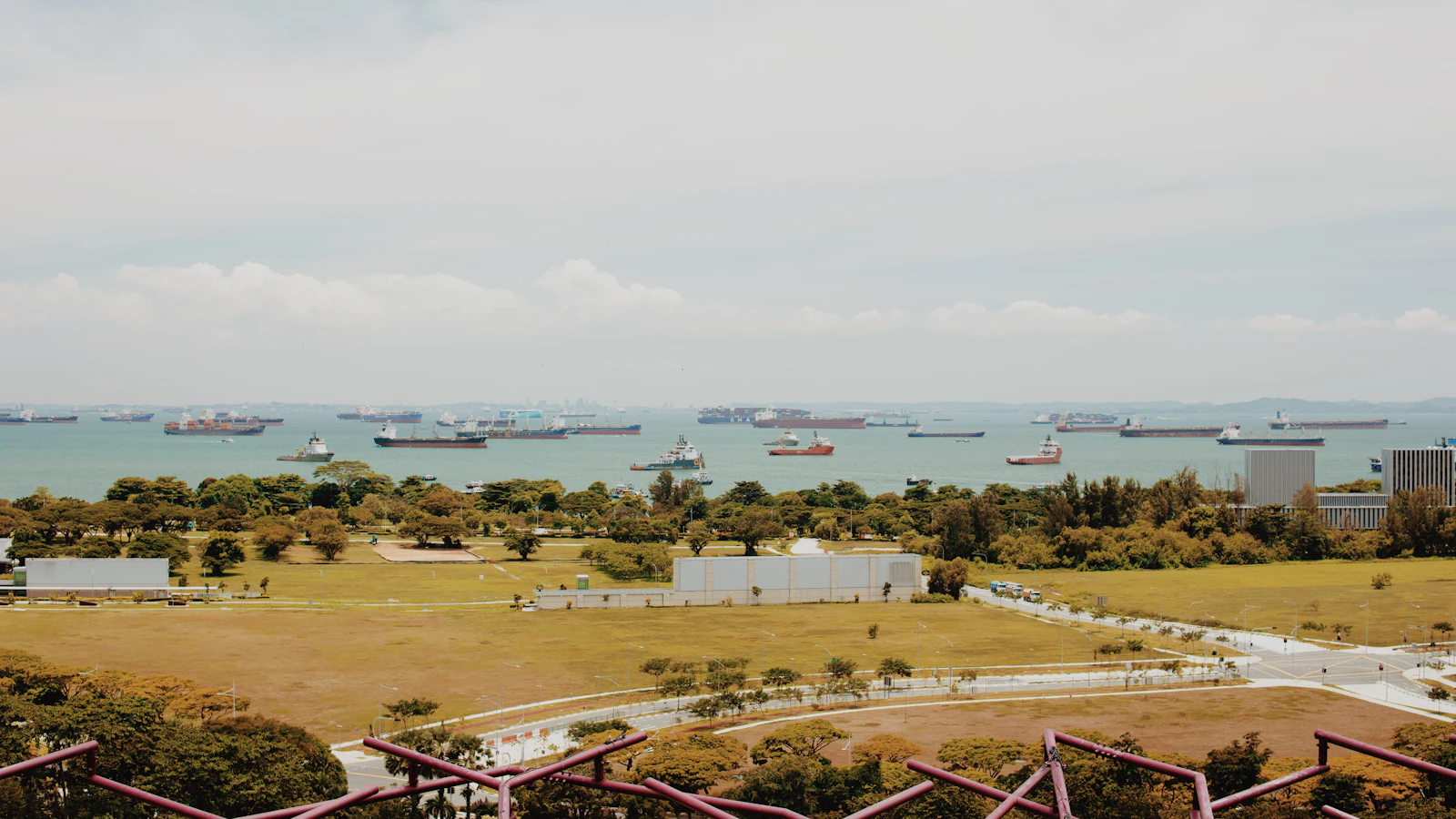
What Singapore did have was location. It sits at the southern tip of the Malay Peninsula, beside the Strait of Malacca, one of the most important shipping routes connecting the Indian Ocean and the Pacific. The British had built Singapore into a trading post in the 19th century for exactly this reason. The challenge for the new government, led by Prime Minister Lee Kuan Yew, was to turn that old entrepôt (re-export) trade into a modern economy that could employ everyone.
Stage 1: Factories, Foreign Investment and Jobs (1960s–1970s)
The first big decision was counter-intuitive for a newly independent country. Instead of protecting local industries from foreign competition, Singapore invited multinational companies in. The Economic Development Board (EDB), set up in 1961, became a kind of salesperson for the country, persuading global manufacturers to build factories on the island.
What made Singapore attractive to investors
- Ready-made industrial land: the government developed Jurong into a large industrial estate with roads, power and port access.
- Tax incentives: companies in priority industries received tax breaks for setting up operations.
- Stable government and rule of law: investors trusted that contracts would be respected and corruption would be punished.
- Disciplined workforce: labour relations were managed through a tripartite model linking government, unions and employers.
Early factories made textiles, garments and simple electronics. These were not glamorous jobs, but they solved the most urgent problem: mass unemployment. Over time, the government pushed industry up the value chain, moving towards petrochemicals, precision engineering and semiconductors.
Stage 2: Building a World-Class Port and Transport Hub
Singapore treated its port as national infrastructure, not just a local business. It invested early in container terminals when containerised shipping was still new, and it kept reinvesting in automation, dredging and new terminals. Today the port is run by PSA and regulated by the Maritime and Port Authority of Singapore (MPA).
The results are visible in the numbers. According to the Maritime and Port Authority of Singapore, the port handled a record 44.66 million TEU (twenty-foot equivalent units) of containers in 2025, up 8.6% from 2024. Vessel arrival tonnage reached 3.22 billion gross tonnes, and bunker (marine fuel) sales hit 56.77 million tonnes, making Singapore the world’s largest ship refuelling hub.
Singapore also built Changi Airport, which opened in 1981, and turned it into a major aviation hub. Together, the port and airport made the island a natural base for regional headquarters, logistics companies and trading firms. Its location next to a key shipping route is part of why maritime chokepoints matter so much to global trade.
Stage 3: Becoming a Global Financial Centre
Shipping and manufacturing created wealth, but Singapore’s leaders knew those industries could move elsewhere as wages rose. Finance offered a way to earn more from the same small land area.
Key steps in the finance story
- The Asian Dollar Market (1968): Singapore allowed banks to trade US dollar deposits held outside the US, filling a gap in the Asian time zone between San Francisco and London.
- Monetary Authority of Singapore (1971): the MAS became a single, highly regarded regulator, acting as both central bank and financial supervisor.
- Sovereign wealth funds: Temasek Holdings (1974) and GIC (1981) were created to manage state assets and national reserves for the long term.
- Strong rules, open markets: clear regulation attracted global banks, insurers, and later wealth managers and fintech firms.
Because the MAS manages monetary policy mainly through the exchange rate rather than an interest-rate target, Singapore is an interesting case for anyone studying how central bank interest rates affect your savings and investments. Its large reserves also give it a cushion during global crises.
Stage 4: Investing in People – Housing, Savings and Education
Economic growth in Singapore was deliberately linked to social stability. Three policies stand out.
Public housing (HDB)
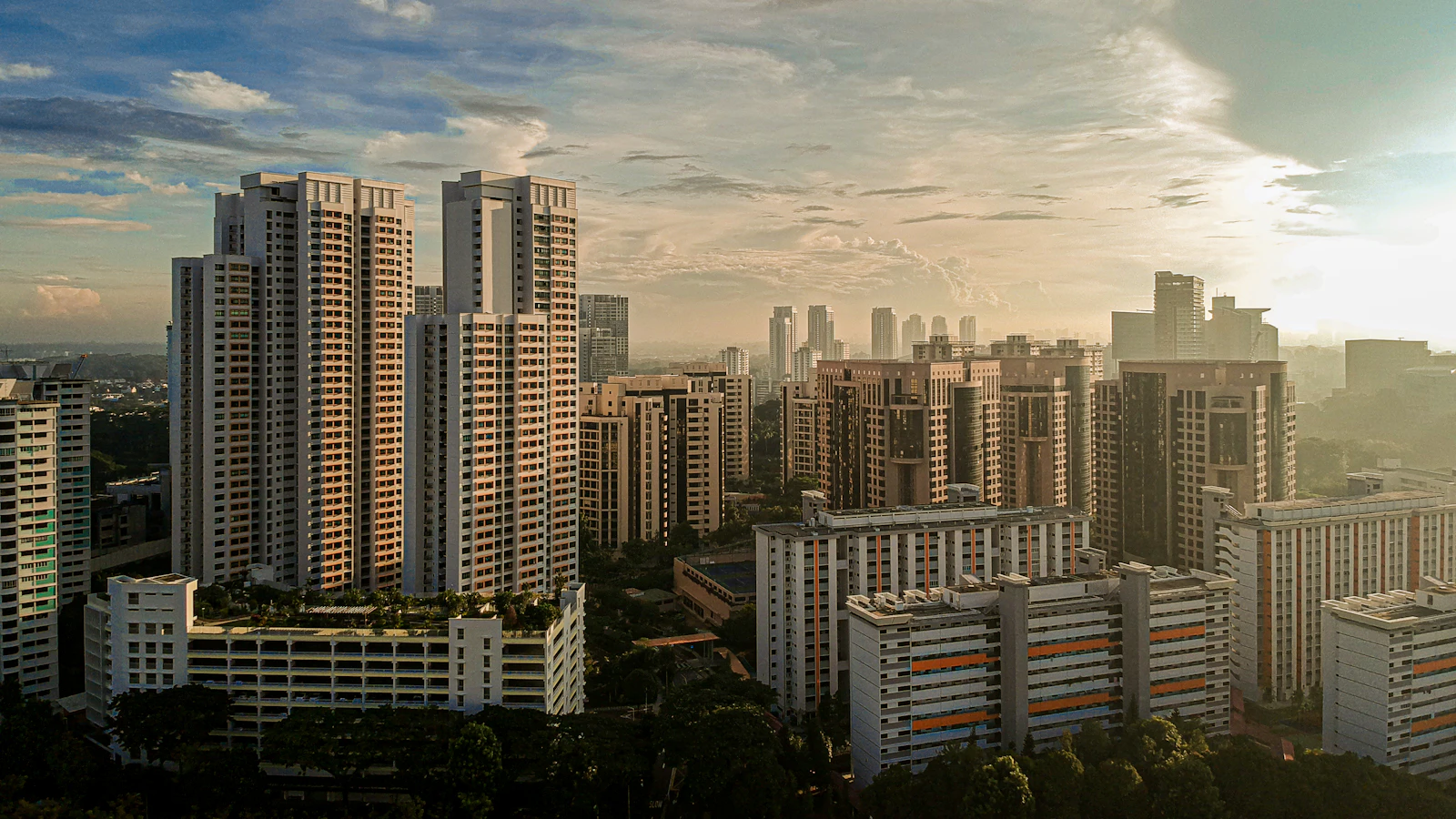
The Housing and Development Board, created in 1960, replaced slums with high-rise flats. Crucially, the government encouraged citizens to own their flats rather than rent them. According to the Housing & Development Board, the majority of Singapore residents live in HDB flats today. Home ownership gave people a personal stake in the country’s success.
Central Provident Fund (CPF)
The CPF, a compulsory savings scheme started in 1955, requires workers and employers to contribute a share of wages. The savings fund retirement, healthcare and housing. High national savings meant Singapore could fund infrastructure without relying heavily on foreign debt. If you want to see why steady long-term saving matters so much, our guide on how compound interest works explains the maths.
Education and skills
English was adopted as the main working language, which connected Singapore to global business. Schools emphasised mathematics and science, and technical institutes trained workers for the industries the EDB was attracting. Later programmes such as SkillsFuture encouraged adults to keep upgrading their skills throughout their careers.
Stage 5: The Knowledge Economy (1990s–Today)
From the 1990s onwards, Singapore shifted again, this time towards research, biomedical sciences, high-end services and digital industries. Projects like the Biopolis research hub and investment in universities aimed to make the city a place where ideas, not just goods, are produced. Today, technology firms, pharmaceutical manufacturers and regional headquarters sit alongside the traditional port and refinery industries.
The International Monetary Fund (IMF) regularly reviews Singapore’s economy and has generally highlighted its strong institutions, sizeable buffers and sound financial supervision, while noting challenges such as an ageing population and exposure to global trade shocks.
The Secret Ingredients: What Really Made It Work
Historians and economists still debate the details, but most agree on a few core factors:
- Long-term planning: political stability allowed policies to run for decades without sudden reversals.
- Clean government: strong anti-corruption laws and well-paid civil servants built trust with investors.
- Openness: free trade, foreign talent and foreign capital were welcomed rather than feared.
- Pragmatism: policies were judged by results, not ideology, and changed when they stopped working.
- Investment in people: housing, savings and education spread the gains widely enough to keep social peace.
Criticisms and Challenges
A balanced view also includes the downsides. Critics point to limits on political freedoms and press freedom, high living costs, income inequality, and heavy reliance on foreign workers. Singapore also faces an ageing population, limited land, and climate risks such as rising sea levels. Its small, open economy is highly sensitive to global recessions and trade disputes. Like any boom, rapid growth can also inflate asset prices; history shows how financial bubbles can form when optimism runs ahead of fundamentals.
Lessons for Other Developing Countries
Singapore’s model cannot simply be copied. It is a city-state with a tiny population and a uniquely strategic location. Still, several lessons travel well: invest in infrastructure before demand arrives, make government predictable and honest, connect education to real jobs, encourage domestic savings, and keep moving up the value chain instead of relying on one industry forever. Countries such as Bangladesh, Vietnam and Rwanda have studied parts of this playbook.
Frequently Asked Questions
Why is Singapore so rich without natural resources?
Singapore built its wealth on location, trade, foreign investment, finance and a skilled workforce. Instead of exporting raw materials, it earns income by moving goods, money and services efficiently through its port, airport and financial system.
Who led Singapore’s economic transformation?
Lee Kuan Yew, Singapore’s first Prime Minister (1959–1990), is the best-known figure. Ministers such as Goh Keng Swee, often called the architect of the economy, and institutions like the EDB, HDB and MAS played equally important roles.
How big is the Port of Singapore today?
In 2025 it handled a record 44.66 million TEU of containers, according to the MPA, and it remains the world’s largest bunkering port.
Can other countries copy the Singapore model?
Not completely, because Singapore’s size and geography are unusual. However, principles such as good governance, infrastructure investment, education and openness to trade can be adapted by many countries.
Summary
Singapore’s journey from a resource-poor island to a global financial and shipping superpower took about six decades of patient, practical decision-making. It used its location to build a world-class port, attracted multinational factories to create jobs, developed a trusted financial sector, and invested heavily in housing, savings and education. The model has real limitations and critics, but it remains one of the most studied development stories of the modern era.
Disclaimer: This article is for general educational purposes only and does not constitute financial or investment advice. Economic figures are based on official sources available at the time of writing and may be revised.