Doctors have always worked with incomplete information. A scan is hard to read, a lab result sits in a grey zone, a new drug takes more than a decade to arrive. AI in healthcare is changing that, not by replacing doctors, but by giving them a very fast, very patient second pair of eyes. This guide explains where it already works, where it is still unproven, and what it means for you as a patient.
Thank you for reading this post, don't forget to subscribe!What “AI in healthcare” actually means
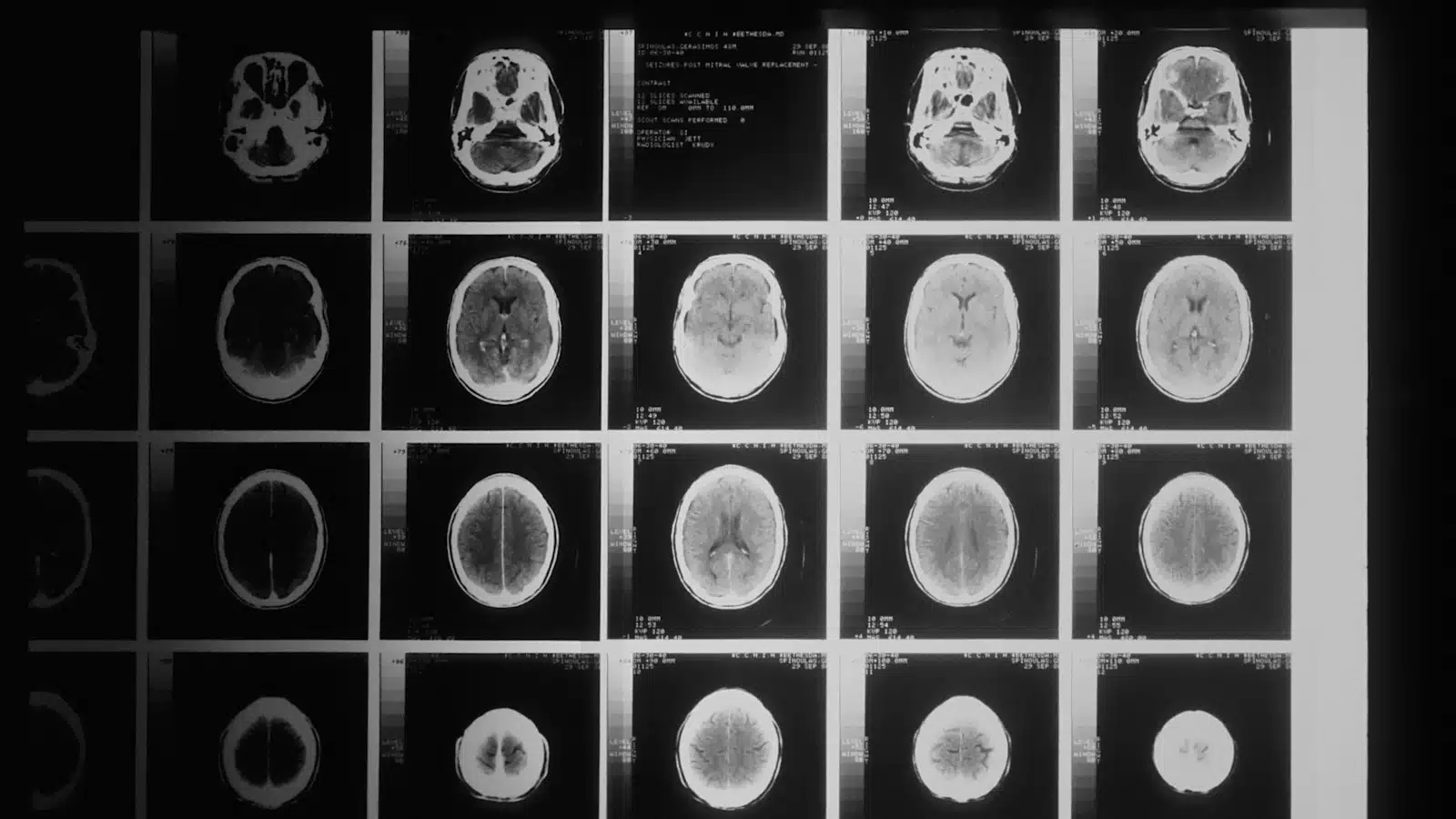
Most medical AI today is not a talking robot. It is software that has learned patterns from huge numbers of past examples, such as X-rays, heart traces, skin photos or lab results, and then flags similar patterns in a new case. A radiologist still reads the scan. The software simply points at the spots worth a closer look.
If you want a plain-English picture of how this kind of learning works under the hood, our explainer on how large language models actually work is a good companion read.
Early cancer detection: the strongest evidence so far
Breast cancer screening gives us one of the clearest examples. The MASAI trial in Sweden randomly assigned about 106,000 women, aged 40 to 74, to either standard screening or AI-supported screening. In the AI group, the software helped decide which mammograms needed one radiologist and which needed two.
- Cancer detection rose by about 29%, mostly small invasive tumours that had not spread to the lymph nodes.
- Radiologists’ reading workload fell by about 44%.
- False positives did not go up.
- In the final results, there were also fewer cancers diagnosed between screening rounds, about 12% fewer, which are the aggressive ones screening is meant to catch.
For the woman being screened, nothing feels different. The AI works afterwards, when the images are read. That is typical of good medical AI: invisible to the patient, useful to the clinician.
How an AI image tool works in practice
The process is simpler than it sounds. Developers show the software many thousands of scans that experts have already labelled, for example “healthy” or “tumour present.” The software slowly learns which visual patterns tend to go with each label. When a new scan arrives, it produces a score or highlights an area, and the radiologist decides what to do with that hint. The human stays responsible for the final report.
This is why training data matters so much. A tool that has only seen scans from one type of machine, or one group of patients, can stumble on anything unfamiliar.
How many AI medical tools are actually approved?
The U.S. Food and Drug Administration keeps a public list of AI-enabled medical devices it has authorized. According to the FDA’s own list, the September 2026 update held 1,614 entries. The FDA itself warns that the list is not a complete picture of every AI-enabled device, so treat it as a floor, not a ceiling.
Two details are worth knowing. First, radiology dominates: roughly three out of four listed devices are imaging tools that help read X-rays, CT scans and MRIs. Second, according to analyses of that list, no device powered by generative AI or a large language model had been authorized as of the latest figures I could find. The chatbots people talk about are mostly not yet cleared as medical devices.
Drug discovery: from a decade to a faster start
Developing a new medicine usually takes more than ten years and costs billions of dollars, and only roughly one in ten candidates that reach clinical trials ends up approved. A big reason is that scientists first have to understand the shape of the proteins involved in a disease.
That is where AlphaFold came in. This AI system predicts the 3D structure of proteins from their building blocks. Its creators, Demis Hassabis and John Jumper, shared the 2024 Nobel Prize in Chemistry for it, together with David Baker, who was honoured for his work on computer-designed proteins.
The next question is whether AI-designed medicines work in real patients. Isomorphic Labs, a spin-off from Google DeepMind, has said it is preparing its first human trials, in cancer and immune diseases. The timeline slipped from the company’s earlier target, which is a useful reminder: AI can speed up the lab stage, but human trials still have to prove a drug is safe and effective.
Can AI help countries with fewer doctors?
This is the hopeful argument for AI in healthcare: a tool that helps read scans or flag high-risk patients could stretch a small number of specialists further. It is a fair argument, but it comes with a warning. The WHO has cautioned against overestimating what AI can deliver at the expense of basic investments in health systems, such as trained staff, clinics, medicines and reliable power and internet. AI works best on top of a working health system, not instead of one.
Less visible uses: triage, paperwork and scheduling
Not every benefit is dramatic. Hospitals are testing AI to sort urgent cases faster, draft routine clinical notes, and spot patients likely to miss appointments. These uses save clinician time, which matters because time is exactly what overloaded health systems lack. They are also easier to supervise, since a human can check the output before anything affects care.
Newer “AI agents” that can carry out multi-step tasks are starting to appear in hospital back offices too. If you are curious how they differ from ordinary chatbots, see our comparison of AI agents vs. chatbots.
The risks nobody should ignore
Medical AI is only as good as the data it learned from, and that creates real problems.
- Bias: a tool trained mostly on patients from one region or group can perform worse for everyone else.
- Privacy: health data is deeply personal, and it needs strong protection when it is used to train or run AI.
- Over-reliance: if clinicians trust a tool too much, they may stop questioning its mistakes.
- Unequal access: wealthy hospitals adopt new tools first, which can widen the gap with poorer regions.
The World Health Organization has taken these concerns seriously. Its guidance on ethics and governance of artificial intelligence for health sets out six consensus principles and argues that ethics and human rights must sit at the centre of how AI is designed and used. The WHO has since added guidance on large multi-modal models, the technology behind many modern chatbots.

Questions worth asking when a clinic says it uses AI
You do not need technical knowledge to ask sensible questions. A few simple ones tell you a lot about how carefully a service is run:
- Has this tool been tested on patients like me, in settings like this one?
- Does a clinician always review its output before decisions are made?
- Where is my data stored, and is it used to train other systems?
- What happens if the tool and the doctor disagree?
Where AI in healthcare is heading
Expect growth in three areas: more imaging tools reaching clinics beyond big hospitals, more careful testing of chatbot-style assistants before any are cleared for medical use, and tighter rules on how health data is used. Regulators are also shifting attention from the moment a device is approved to how it keeps performing in the real world. The direction is encouraging, but each step still needs good evidence behind it.
What this means for you as a patient
- You can ask your doctor whether AI helped read your scan or test. It is a normal question.
- Treat a general chatbot as a way to prepare questions, not as a diagnosis.
- Be careful what personal health details you paste into any online tool.
- Do not delay screening, symptoms or treatment because a tool said “all clear.”
Frequently asked questions
Will AI replace doctors?
Not in the foreseeable future. The best evidence so far, like the Swedish screening trial, shows AI working alongside clinicians. Judgment, communication and responsibility for the patient remain human jobs.
Is AI diagnosis accurate?
It depends on the tool, the task and the patients it was tested on. Some narrow tools perform very well in trials. Accuracy in one hospital does not guarantee the same result in another, which is why independent testing matters.
Is my health data safe with medical AI?
It depends on local laws and on how a hospital or company handles data. Ask how your information is stored, who can see it, and whether it is used to train AI.
Can I use ChatGPT-style tools for medical advice?
They can explain terms and help you write questions for your appointment, but they can be confidently wrong. They are not a substitute for a clinician who can examine you.
Summary
AI in healthcare is already useful in specific, well-tested jobs, especially reading medical images and speeding up early research for new drugs. The strongest evidence, such as the Swedish mammography trial, shows people and software working together. The risks around bias, privacy and over-trust are real, and they are why careful regulation and human oversight matter. Expect steady progress rather than overnight miracles.
This article is for general information only and is not medical advice. Always talk to a qualified healthcare professional about your own health.