Look at a world map and the oceans seem endless. But ships do not sail wherever they like. Most of the oil, grain, cars and phones that cross the seas are squeezed through a handful of narrow passages. These are called maritime chokepoints, and when one of them is blocked, even for a few days, fuel prices, shipping costs and delivery times can change around the world.
Thank you for reading this post, don't forget to subscribe!In this guide we explain, in plain language, what a chokepoint is, why seven of them matter more than the rest, and what recent disruptions in the Red Sea and the Panama Canal have taught us. The numbers come mainly from the U.S. Energy Information Administration (EIA) and the UN Conference on Trade and Development (UNCTAD).
What Is a Maritime Chokepoint?
A maritime chokepoint is a narrow channel, strait or canal that ships must pass through because the alternative route is much longer, more expensive or does not exist at all. Think of it like a single bridge over a big river: if that bridge closes, every truck has to drive hours out of its way.
Chokepoints matter because sea transport dominates global trade. According to the EIA, roughly three quarters of all the oil produced in the world travels by sea at some point, and in the first half of 2025 world maritime oil trade averaged about 79.8 million barrels per day. A big part of that flow passes through just a few gateways.
- Natural straits such as Hormuz, Malacca and Bab el-Mandeb are gaps between landmasses.
- Man-made canals such as Suez and Panama were dug to cut thousands of kilometers off voyages.
- Risks include war, piracy, accidents, drought and political pressure from nearby countries.
1. The Strait of Hormuz: The World’s Oil Valve
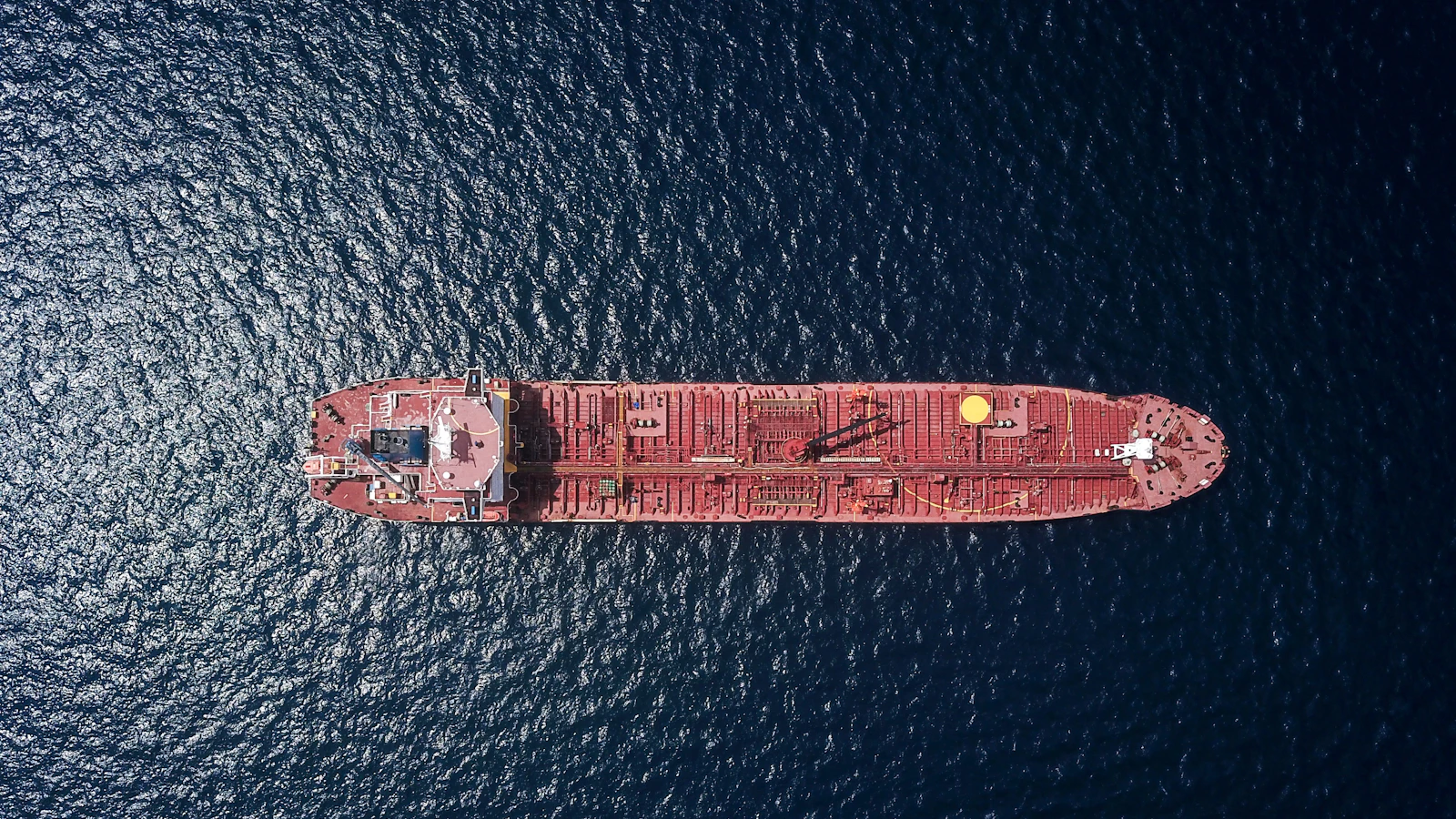
The Strait of Hormuz links the Persian Gulf to the Gulf of Oman and the Arabian Sea, with Iran on one side and Oman on the other. Crude oil and liquefied natural gas from Saudi Arabia, Iraq, Kuwait, the UAE, Qatar and Iran leave the Gulf through this single exit.
The EIA estimates that about 20.9 million barrels per day of oil moved through Hormuz in the first half of 2025. That equals roughly 20% of global petroleum liquids consumption and about one quarter of all oil traded by sea. Only a limited amount of pipeline capacity exists to bypass the strait, which is why any tension in the region quickly shows up in oil prices.
2. The Strait of Malacca: Asia’s Busiest Shortcut
The Strait of Malacca runs between the Malay Peninsula and the Indonesian island of Sumatra, connecting the Indian Ocean with the South China Sea and the Pacific. It is the shortest sea route between the Middle East and the big economies of East Asia, including China, Japan and South Korea.
By oil volume it is the largest chokepoint in the world. The EIA puts the flow at about 23.2 million barrels per day in the first half of 2025, around 29% of all maritime oil flows. It also carries a huge amount of container traffic, which is one reason Singapore, at its southern end, grew into a global shipping hub. You can read that story in our article on how Singapore became a global financial and shipping superpower.
3. The Suez Canal: The Europe-Asia Express Lane
Opened in 1869, Egypt’s Suez Canal connects the Mediterranean Sea with the Red Sea. Without it, ships between Europe and Asia have to sail around the southern tip of Africa, adding many days to each voyage. Alongside the canal, the SUMED pipeline can move about 2.5 million barrels of oil per day across Egypt.
Suez shows how fragile chokepoints can be. Oil flows through the canal and SUMED reached about 8.8 million barrels per day in 2023 but dropped to around 4.8 million in 2024, according to the EIA, after attacks on ships in the Red Sea pushed many operators to avoid the route. UNCTAD reported that tonnage crossing the canal fell by 70% compared with late 2023.
4. Bab el-Mandeb: The Southern Gate of the Red Sea
Bab el-Mandeb lies between Yemen on the Arabian Peninsula and Djibouti and Eritrea in the Horn of Africa. Every ship using the Suez Canal on its way to or from the Indian Ocean must also pass through here, so the two chokepoints work as a pair.
Oil flows through Bab el-Mandeb fell from about 9.3 million barrels per day in 2023 to around 4.1 million in 2024, based on EIA data. UNCTAD found that tonnage through the Gulf of Aden dropped 76%, while ship capacity arriving around the Cape of Good Hope rose 89% as vessels took the long way around Africa.
5. The Panama Canal: Linking Two Oceans
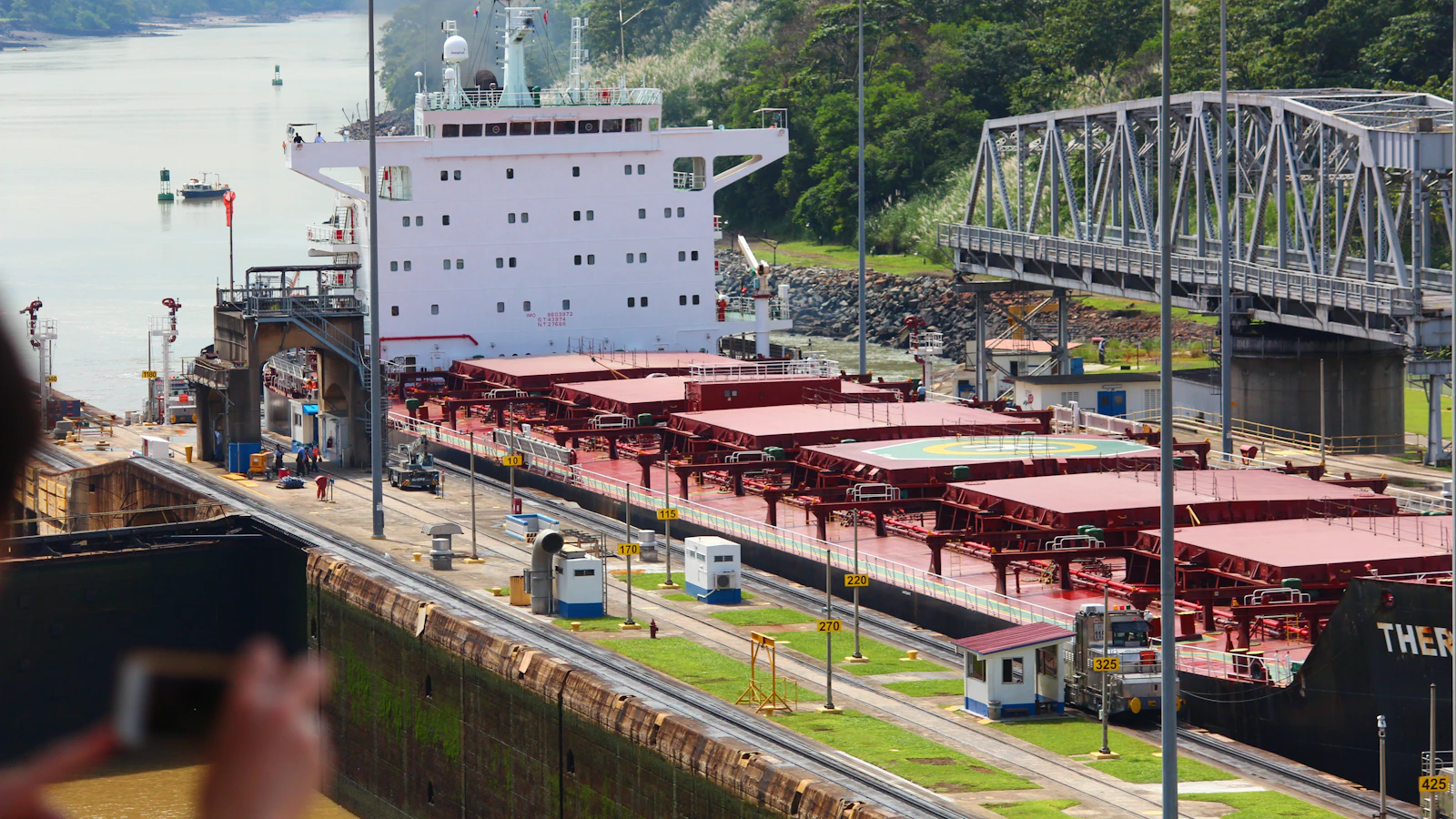
The Panama Canal is about 50 miles (80 km) long and connects the Atlantic and Pacific Oceans. Unlike Suez, it uses a system of locks that lift ships up to an artificial lake and lower them back down. This makes it unusual: its capacity depends on rainfall, because each transit uses large amounts of fresh water.
Panama is less important for oil, carrying only about 3% of global maritime petroleum flows according to the EIA, but it is vital for container ships, grain and gas cargoes moving between the Americas and Asia. During a severe drought, authorities had to limit daily transits, and UNCTAD noted that traffic through both the Panama and Suez canals had dropped by more than 50% from their peaks by mid-2024.
6. The Turkish Straits: Bosporus and Dardanelles
The Bosporus and the Dardanelles connect the Black Sea to the Mediterranean, with the city of Istanbul sitting right on the Bosporus. The EIA describes the Bosporus as a 17-nautical-mile waterway that is less than half a nautical mile wide at its narrowest point, which makes it one of the hardest passages in the world for large tankers.
About 3.7 million barrels of oil per day passed through in the first half of 2025, mainly from Russia and the Caspian region, roughly 5% of global maritime oil trade. The straits are also important for grain exports from the Black Sea region.
7. The Danish Straits: The Baltic Gateway
The Danish Straits are a set of channels between Denmark, Sweden and Germany that connect the Baltic Sea with the North Sea. Ports in Russia, Poland, the Baltic states, Finland and Sweden rely on them. The EIA estimates about 4.9 million barrels per day of oil moved through these straits in the first half of 2025, about 6% of global maritime oil trade.
Quick Comparison of Oil Flows
| Chokepoint | Oil flow, 1H 2025 (million b/d) | Main connection |
|---|---|---|
| Strait of Malacca | 23.2 | Indian Ocean to Pacific |
| Strait of Hormuz | 20.9 | Persian Gulf to Arabian Sea |
| Suez Canal + SUMED | 4.9 | Mediterranean to Red Sea |
| Danish Straits | 4.9 | Baltic to North Sea |
| Bab el-Mandeb | 4.2 | Red Sea to Gulf of Aden |
| Turkish Straits | 3.7 | Black Sea to Mediterranean |
| Panama Canal (FY2025) | 2.3 | Atlantic to Pacific |
How Chokepoint Disruptions Affect Ordinary People
You may never see a tanker, but chokepoints still reach your wallet. When ships must take longer routes, they burn more fuel, need more days at sea and pay higher insurance premiums. Those costs flow into the price of goods.
- Fuel prices: fears about Hormuz can push up crude prices within hours.
- Freight rates: rerouting around Africa ties up ships and raises container costs.
- Inflation: higher transport costs can feed into consumer prices, which in turn shapes central bank decisions. See our guide on how central bank interest rates affect your mortgage and savings.
- Developing countries: UNCTAD warns that small island and import-dependent nations are hit hardest because they have few alternatives.
Shocks like these also move markets. Investors often overreact to sudden supply fears, a pattern we explore in 7 historic financial bubbles and why investors repeat them.
Can the World Reduce Its Dependence on Chokepoints?
Countries and companies use several strategies, though none removes the risk completely:
- Bypass pipelines, such as SUMED in Egypt and pipelines in Saudi Arabia and the UAE that reach ports outside Hormuz.
- Strategic oil reserves held by governments to cover short supply gaps.
- Alternative routes like the Cape of Good Hope, which handled about 9.1 million barrels per day in early 2025 according to the EIA.
- Naval patrols and diplomacy to keep sea lanes open and safe.
Frequently Asked Questions
Which is the most important maritime chokepoint?
By oil volume, the Strait of Malacca carries the most, closely followed by the Strait of Hormuz. Hormuz is often considered the most critical because there are very few ways to bypass it.
Why did ships stop using the Suez Canal?
From late 2023, attacks on commercial ships in the Red Sea led many shipping lines to avoid Bab el-Mandeb and Suez, sending vessels around the Cape of Good Hope instead.
How does drought affect the Panama Canal?
The canal’s locks rely on fresh water from Gatun Lake. When rainfall is low, the lake level drops and authorities must limit the number and draft of ships that can pass.
Do chokepoints affect prices in countries far away?
Yes. Oil and freight are priced globally, so a disruption in one strait can raise fuel and shipping costs for importers on the other side of the world.
Summary
Seven narrow passages, Hormuz, Malacca, Suez, Bab el-Mandeb, Panama, the Turkish Straits and the Danish Straits, carry a remarkable share of the world’s oil and goods. Malacca and Hormuz alone handle more than 40 million barrels of oil a day. Recent Red Sea attacks and Panama’s drought showed how quickly trouble at one gateway can ripple through prices and supply chains everywhere. Understanding these chokepoints helps explain headlines about fuel costs, inflation and geopolitics.
Disclaimer: This article is for general educational purposes only and is not financial or investment advice. Figures are taken from EIA and UNCTAD publications and may be revised.