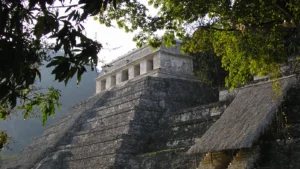
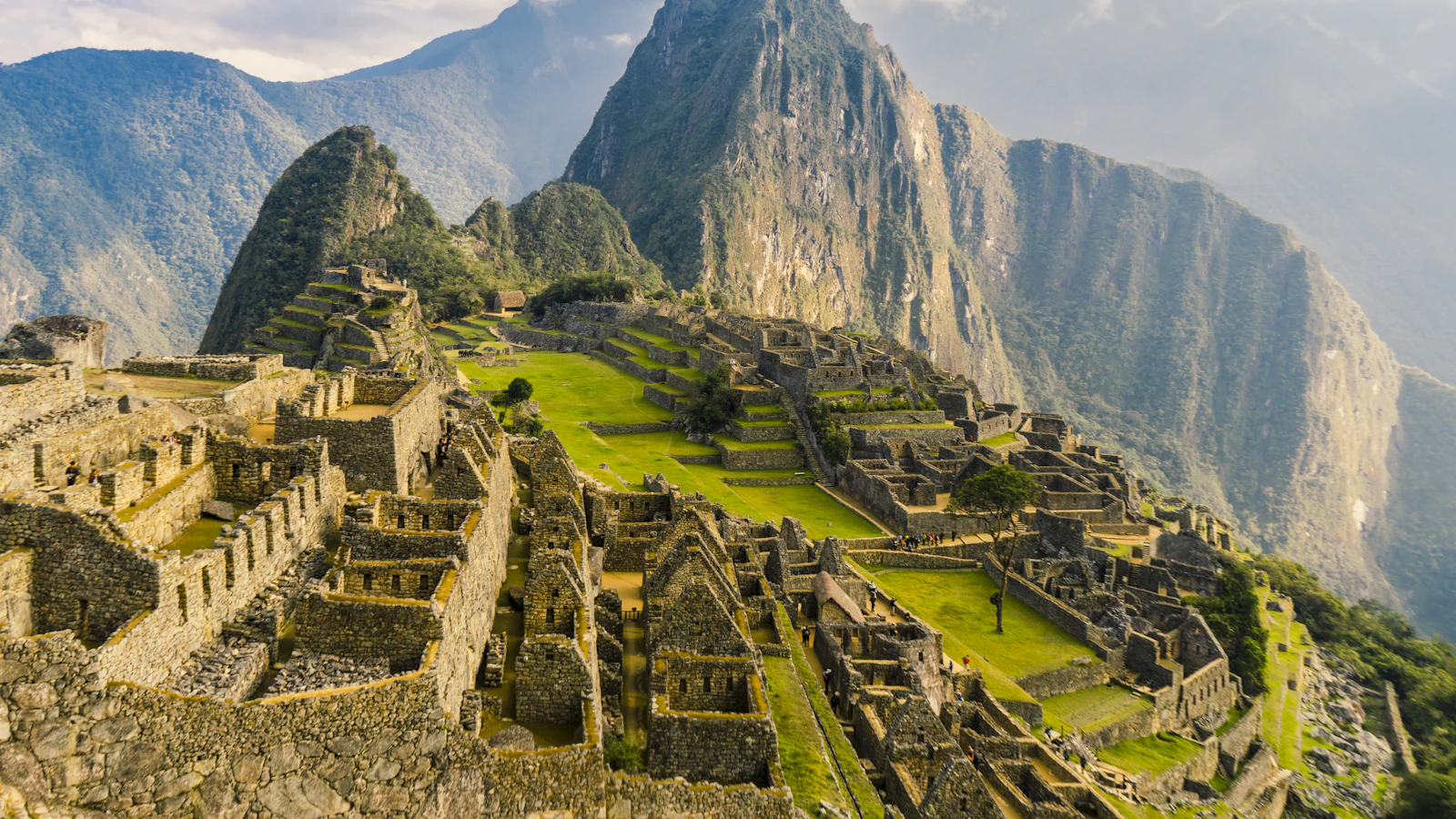
Most people picture Machu Picchu when they think of ancient Peru. Yet the Inca Empire only rose in the 1400s and fell in the 1530s, a blink in a human story that stretches back thousands of years. Long before the Inca, other Andean societies were building pyramids, carving sacred stones, irrigating deserts and ruling cities of tens of thousands of people. These are the pre-Inca civilizations of Peru, and their achievements still surprise archaeologists today.
Thank you for reading this post, don't forget to subscribe!In this guide we follow four of the most important cultures: Caral, Chavin, Moche and Chimu. We keep the language simple, explain why each one matters and show how they connect, because each society built on the ideas of the ones before it. If you enjoy this topic, you may also like our news story on a rare burial of an elite toddler from a pre-Inca culture.
Why Peru Became a Cradle of Civilization
Peru is one of only a few places on Earth where civilization appeared on its own, without borrowing the idea from a neighbor. The country has an unusual mix of geography: a bone-dry Pacific coast crossed by rivers that run down from the mountains, high Andean valleys, and the Amazon basin to the east. The cold Humboldt Current offshore fills the ocean with fish, which gave coastal communities a rich and reliable food supply.
Because the desert gets almost no rain, people had to organize themselves to share river water. Building canals and storing food needed planning, leaders and labor teams. Over time those habits grew into temples, cities and states. Dry conditions also helped preserve textiles, mummies and adobe buildings that would have rotted elsewhere.
Quick Timeline of the Major Cultures
- Caral (about 3000 to 1800 BCE): monumental pyramids on Peru’s central coast.
- Chavin (about 900 to 200 BCE): a religious center in the highlands that spread art and ideas.
- Moche (about 100 to 700 CE): skilled farmers, metalworkers and potters on the northern coast.
- Chimu (about 900 to 1470 CE): builders of Chan Chan, the largest adobe city in the Americas, conquered by the Inca.
Dates are approximate and scholars sometimes revise them as new radiocarbon results arrive. Treat them as a map, not a stopwatch.
Caral: The Oldest City in the Americas
A city older than the pyramids debate
Caral sits in the dry Supe Valley, about 200 kilometers north of Lima. It was occupied roughly 5,000 years ago, at a time when Egypt was also raising its first great monuments. The site has six large stepped platform mounds, sunken circular plazas and residential areas. It was inscribed as a UNESCO World Heritage Site, and you can read the official description on the UNESCO World Heritage page for Caral-Supe.
What made Caral unusual
Caral grew without pottery and without much evidence of warfare. Instead, its economy appears to have been built on trade between coastal fishing villages and inland farming communities. Fishermen supplied anchovies and sardines, while farmers grew cotton, beans, squash and other crops. Cotton was crucial for making fishing nets, so the two groups needed each other.
Researchers have also found musical instruments such as flutes made from bird bones, which suggests ceremonies with music were part of public life. Caral and its neighbors are often grouped under names like Caral-Supe or Norte Chico, and they show that large public architecture can appear before pottery, metal tools or even much farming of grain.
Chavin: The Temple That Spread a Style
Roughly 2,000 years after Caral’s rise, a new center emerged high in the Andes at Chavin de Huantar, about 3,000 meters above sea level. Chavin was less a capital and more a pilgrimage site. People traveled from many regions to visit its temple, bringing offerings and returning home with new religious images and ideas.
The temple complex has stone platforms, plazas and a maze of narrow underground galleries. Deep inside stands the Lanzon, a tall carved granite monolith showing a fanged being. Carved heads, jaguars, eagles and snakes decorate the walls. Visitors moving through dark, echoing tunnels likely felt awe and fear, which would have strengthened the authority of the priests. The site is protected as a UNESCO World Heritage Site.
Chavin’s lasting influence is its art style. Similar motifs show up on textiles, pottery and metalwork across large parts of Peru, which suggests shared beliefs and trade networks rather than conquest. It also helped spread advances in weaving and goldwork.
Moche: Irrigators, Artists and Warrior-Priests
The Moche lived along Peru’s northern coast in a string of river valleys. They did not form one unified empire in the way the Inca later did. Scholars generally describe a group of related polities that shared religion, art and technology. Their greatest strength was water management: long canals carried river water to fields of maize, beans, squash and peppers across the desert.
Monuments and royal tombs
Moche builders raised enormous adobe platforms known as huacas, including the Huaca del Sol and Huaca de la Luna near the modern city of Trujillo. Walls at Huaca de la Luna were painted with bright murals. In 1987, archaeologists uncovered the intact tomb of the Lord of Sipan, a ruler buried with gold, silver, turquoise and copper ornaments. It remains one of the richest burials ever found in the Americas.
Pottery that tells stories
Moche potters made lifelike portrait vessels showing individual faces, as well as scenes of hunting, fishing, ritual combat and daily life. Because the Moche left no deciphered writing, these ceramics are a major source for understanding their society. Metalworkers also mastered gilding and alloys, producing jewelry that dazzled even later cultures.
Why did Moche power fade around 700 CE? Evidence points to a mix of long droughts, severe climate events, floods and internal stress. It is a good reminder that even sophisticated societies depend on stable environments. For another Peruvian mystery, see our article on why the Nazca Lines were built.
Chimu: Chan Chan and the Last Great Coastal Kingdom
Several centuries after the Moche declined, the Chimu rose in the same region and built the Chimu kingdom around about 900 CE. Their capital, Chan Chan, was a sprawling adobe city near modern Trujillo and is often described as the largest mud-brick city in the Americas. It contained great walled compounds, courtyards, storage rooms, reservoirs and decorated walls carved with fish, birds and geometric patterns. See the UNESCO listing for Chan Chan for details on its protection and conservation.
The Chimu were expert metalworkers, working gold, silver and bronze, and they ran an administrative system that collected goods from many valleys. They expanded along the coast until, around 1470 CE, the Inca conquered the kingdom. Many Chimu artisans were then relocated to the Inca capital Cusco, so Chimu skills flowed into Inca craftsmanship. This is a key link: Inca success owed a lot to the cultures they absorbed.
What These Cultures Have in Common
- Water control: canals and terraces turned deserts and slopes into farmland.
- Shared labor: big projects were built by organized work teams rather than by slaves alone.
- Religion and power: temples, rulers and rituals were tightly linked.
- Record keeping without alphabets: knotted cords and visual art carried information.
- Skilled crafts: weaving, metallurgy and pottery reached a very high level.
Their story also shows how climate, trade and belief shape history. If you like exploring how scientists reconstruct the distant past, our report on the oldest dwelling in the Western Hemisphere is a good next read.
How Do We Know So Much?
Archaeologists rely on excavation, radiocarbon dating, analysis of textiles and bones, and increasingly on satellite imagery and laser scanning. Careful digging at sites like Caral and Chan Chan, along with the study of tombs and ceramics, allows teams to estimate dates, diets and social rank. Interpretations can change as methods improve, so it is wise to treat any single date or population figure as a best current estimate.
Frequently Asked Questions
What was the first civilization in Peru?
The Caral-Supe (Norte Chico) society, active around 3000 to 1800 BCE, is widely regarded as the earliest known complex society in Peru and one of the oldest in the Americas.
Did the pre-Inca cultures have writing?
No fully deciphered alphabet is known for these cultures. They used art, architecture and, in later periods, knotted-string devices to store and share information.
Who conquered the Chimu?
The Inca conquered the Chimu kingdom around 1470 CE and absorbed many of its artisans and administrative ideas.
Can I visit these sites today?
Yes. Caral, Chavin de Huantar, Huaca de la Luna and Chan Chan are all open to visitors, though access rules and opening hours change, so check official tourism sources before you travel.
Summary
The Inca were the final chapter, not the first. Caral raised the earliest monumental centers, Chavin spread a shared religious style, the Moche mastered irrigation and portrait art, and the Chimu built a vast adobe capital before falling to the Inca. Together they show that the Andes were a lasting laboratory of human creativity. Learning their names gives us a far richer picture of the Americas before European contact.
Note: This article is for general education. Dates and interpretations are approximate and may be revised as new archaeological evidence emerges.