Imagine living in a country where about a quarter of the land lies below sea level, and where the sea, the Rhine, the Meuse and the Scheldt all meet in a tangle of estuaries. That is the everyday reality of the Netherlands. The Dutch did not simply accept that risk. After one terrible night in 1953, they launched one of the most ambitious engineering projects in history: the Netherlands Delta Works.
Thank you for reading this post, don't forget to subscribe!In this guide we explain, in plain language, why the Delta Works were built, how the main dams and barriers work, how the Dutch reclaimed land from the sea long before that, and what the rest of the world can learn as sea levels keep rising.
A Country Shaped by Water
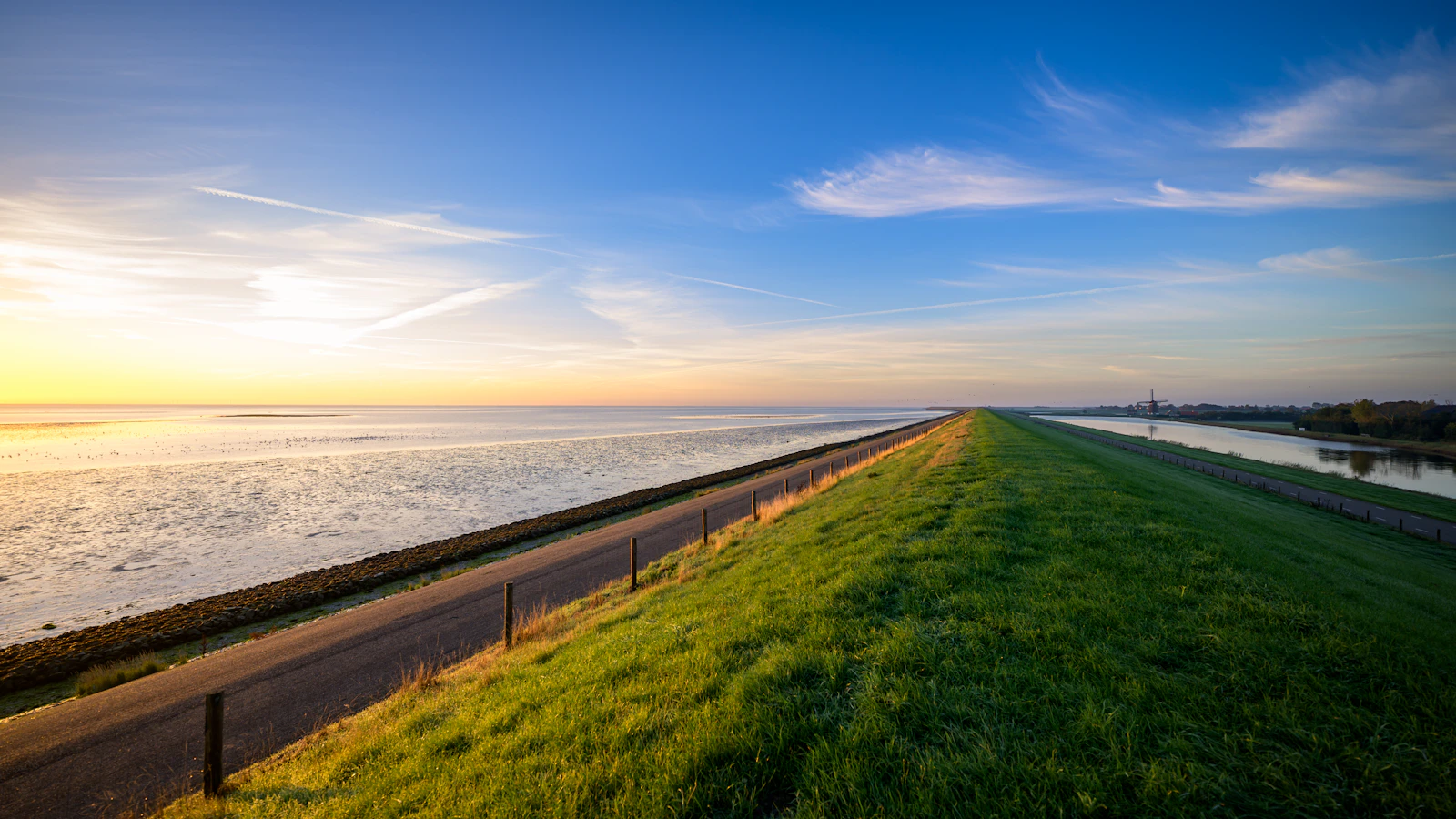
The Dutch have been fighting water for more than a thousand years. Early farmers built houses on artificial mounds called terpen. Later, communities linked those mounds with dikes. From the Middle Ages onward, they enclosed low wetlands with dikes and pumped them dry, creating flat, fertile land known as a polder.
Windmills did the pumping for centuries, lifting water step by step into canals and out to rivers. Steam pumps and later diesel and electric pumps took over. The largest land reclamation of the twentieth century, the Zuiderzee Works, closed off an inland sea with the 32-kilometre Afsluitdijk in 1932 and turned large parts of it into new polders, including much of today’s province of Flevoland.
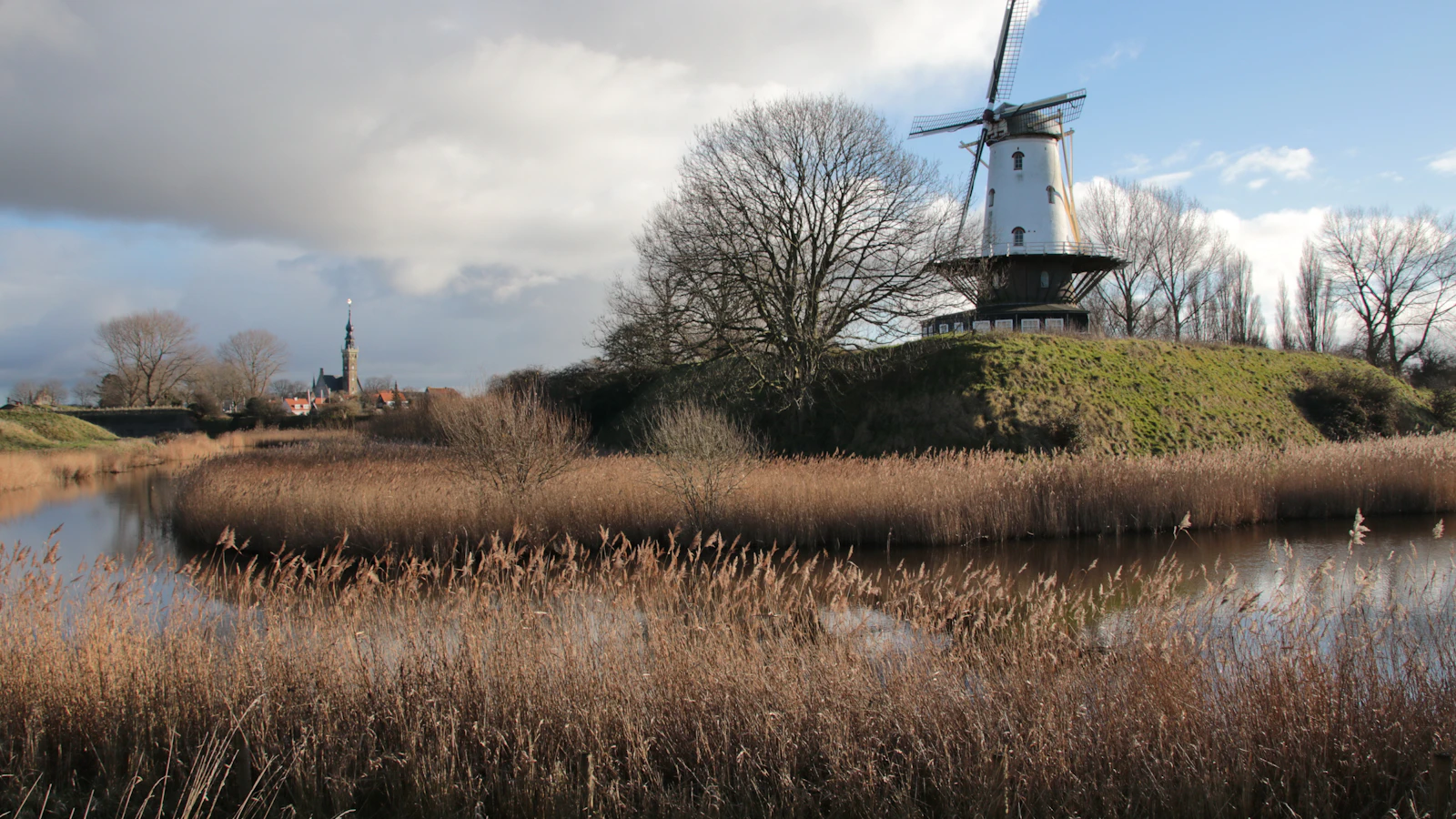
Key ideas behind Dutch water management:
- Dikes keep water out of low-lying land.
- Polders are areas enclosed by dikes where the water level is controlled artificially.
- Pumping stations (once windmills) remove rain and seepage water.
- Water boards, some of the oldest democratic institutions in the country, manage local water levels and defences.
The Night That Changed Everything: The North Sea Flood of 1953
On the night of 31 January to 1 February 1953, a severe storm over the North Sea combined with a spring tide. The water rose far higher than the old dikes in the southwest were built for. Dikes in Zeeland, South Holland and North Brabant broke in many places, and seawater poured into towns and farmland while most people were asleep.
The flood killed 1,836 people in the Netherlands, according to the official Dutch historical canon, and forced tens of thousands from their homes. Huge areas of farmland were ruined by salt water. England and Belgium were also hit hard. For the Dutch, the disaster, known as the Watersnoodramp, became a national turning point. You can read a clear account on the Canon of the Netherlands.
The Delta Plan: Shortening the Coastline
Only weeks after the flood, the government set up the Delta Committee. Its central idea was simple but bold: instead of raising hundreds of kilometres of dikes along every estuary, close the estuary mouths themselves. That would shorten the coastline exposed to the sea by hundreds of kilometres. The plan was written into law with the Delta Act of 1958, and the national water authority, Rijkswaterstaat, took charge of building it.
The committee also introduced a new way of thinking about safety. Rather than building for the worst storm anyone remembered, engineers calculated how often an extreme water level might occur and set legal safety standards. The most densely populated and economically important areas were given the strictest protection, designed for storms expected only once in thousands of years.
The Main Structures of the Delta Works
The Delta Works are not one dam but a system of dams, sluices, locks and storm surge barriers built over roughly four decades. Some of the best known are:
1. Storm Surge Barrier on the Hollandse IJssel (1958)
The first project to be finished protects the lowest part of the country near Rotterdam. Movable steel gates can be lowered when a storm pushes water up the river.
2. Haringvliet Dam (1971)
This dam closed the Haringvliet estuary but includes large sluices that release river water from the Rhine and Meuse into the sea. Since 2018 the sluices have been opened partly on a “kier” (ajar) basis to help migrating fish such as salmon.
3. Oosterscheldekering, the Eastern Scheldt Barrier (1986)
This is the icon of the Delta Works. The original plan was to close the Eastern Scheldt completely. Fishermen and environmental groups protested, because a closed dam would have turned a rich tidal ecosystem into a stagnant lake. The government changed course: engineers designed a barrier about 9 kilometres long with 62 huge sliding steel gates. Normally the gates stay open and the tide flows in and out. When a dangerous storm surge is forecast, the gates close. It was a landmark compromise between safety and nature.
4. Maeslantkering (1997)
The final major piece guards the Nieuwe Waterweg, the shipping route to the Port of Rotterdam, one of the busiest ports in the world. Closing the channel permanently was impossible, so engineers built two giant floating gates on hinged arms. Each arm is roughly as long as the Eiffel Tower is tall. The gates rest in dry docks on the riverbanks and swing out and sink into place only when the water at Rotterdam is predicted to rise to a dangerous level. The closure is controlled by a computer system, which removes human hesitation in an emergency.
Other parts of the system include the Veerse Gatdam, Grevelingendam, Volkerakdam, Brouwersdam, Philipsdam and the Hartelkering. Together they protect the southwest delta and the Rotterdam region.
How Did They Actually Build It?
Closing a tidal estuary is extremely difficult, because huge volumes of water rush through the gap as it narrows. Dutch engineers developed several techniques that later spread worldwide:
- Caissons: large concrete boxes floated into position and sunk to close a gap quickly.
- Cable cars dropping stone: for some dams, gondolas dropped concrete blocks into the final gap so the closure happened evenly.
- Prefabricated piers: the Oosterscheldekering’s 65 concrete piers were built in a dry dock, then carried by special ships and placed on a prepared sea bed.
- Foundation mattresses: giant mats filled with sand and gravel stopped the strong currents from washing away the sea bed beneath the structures.
The American Society of Civil Engineers later named the Delta Works, together with the Zuiderzee Works, one of the Seven Wonders of the Modern World. If you enjoy big engineering stories, you may also like our explainer on how reusable rockets land vertically.
Has It Worked?
Since the Delta Works were completed, the southwest Netherlands has not suffered a disaster like 1953. The barriers close when needed. The Maeslantkering closed for the first time during a real storm in November 2007, and it has closed again in later storms, such as in December 2023, when it and the Hartelkering closed together for the first time.
The project also brought side benefits: shorter road connections across the islands of Zeeland, fresh water reservoirs for farming, and new recreation areas. But there were costs too. Closed estuaries lost their tides, which changed ecosystems, reduced some fisheries and caused problems such as poor water quality in certain lakes. Today Dutch planners try to restore some natural dynamics where it is safe to do so.
From Fighting Water to Living With Water
Dutch thinking has evolved. The “Room for the River” programme, completed in the late 2010s, lowered floodplains, moved dikes inland and created side channels so rivers could carry high water safely instead of simply building dikes higher. On the coast, “sand engines” let wind and waves spread dumped sand naturally to strengthen beaches and dunes.
Looking ahead, the national Delta Programme regularly reviews whether current defences can cope with sea level rise. The Intergovernmental Panel on Climate Change (IPCC) projects continued global sea level rise through this century, and Dutch planners are studying what the country may need later this century, including possible upgrades or replacements for barriers like the Maeslantkering.
Lessons for the Rest of the World
Many delta countries face similar threats, from Bangladesh and Vietnam to Egypt and the US Gulf Coast. Dutch experts often advise these countries, and Bangladesh even drew up its own Bangladesh Delta Plan 2100 with Dutch support. Some lessons travel well:
- Plan for the long term and protect the plan in law so it survives changes of government.
- Use risk-based safety standards instead of only reacting to the last disaster.
- Combine hard and soft solutions: barriers and dikes, plus wetlands, dunes and space for rivers.
- Listen to local communities and ecologists, as the Eastern Scheldt redesign showed.
Strong water infrastructure also supports trade and economic growth. Rotterdam’s protected port is a gateway for Europe, much like the strategic sea routes we cover in the world’s most critical maritime chokepoints, and the port story of how Singapore became a shipping superpower.
Frequently Asked Questions
What are the Delta Works?
The Delta Works are a series of dams, sluices, locks, dikes and storm surge barriers in the southwest Netherlands, built after the 1953 flood to shorten the coastline and protect the land from the North Sea.
When were the Delta Works completed?
Work began in the 1950s. The Oosterscheldekering opened in 1986, and the Maeslantkering, completed in 1997, is usually considered the final major structure of the original plan.
Why is the Eastern Scheldt barrier open most of the time?
Keeping the gates open preserves the tides and the rich salt water ecosystem of the Eastern Scheldt. The gates close only when a dangerous storm surge is expected.
Is the Netherlands safe from sea level rise?
The country is among the best protected in the world, but no defence is permanent. The Delta Programme regularly reassesses risks and plans upgrades as climate projections change.
Summary
The Netherlands Delta Works were born from tragedy. After the North Sea flood of 1953 killed 1,836 people, the Dutch closed off their estuaries, built world-famous barriers like the Oosterscheldekering and the Maeslantkering, and created a legal framework for long-term flood safety. Combined with centuries of polders, windmills and land reclamation, the project shows how a small country can hold back the sea. Its biggest lesson today is that flood defence is never finished: it must keep adapting as the climate changes.