Imagine a city where caliphs paid scholars to translate books, where Greek, Persian, Indian and Syriac knowledge met in one place, and where a mathematician could invent the foundations of algebra. That city was Baghdad in the ninth century, and its most famous intellectual hub was the House of Wisdom (Bayt al-Hikma). In this guide, you will learn what the House of Wisdom really was, who worked there, what they achieved, and why historians still debate parts of its story.
Thank you for reading this post, don't forget to subscribe!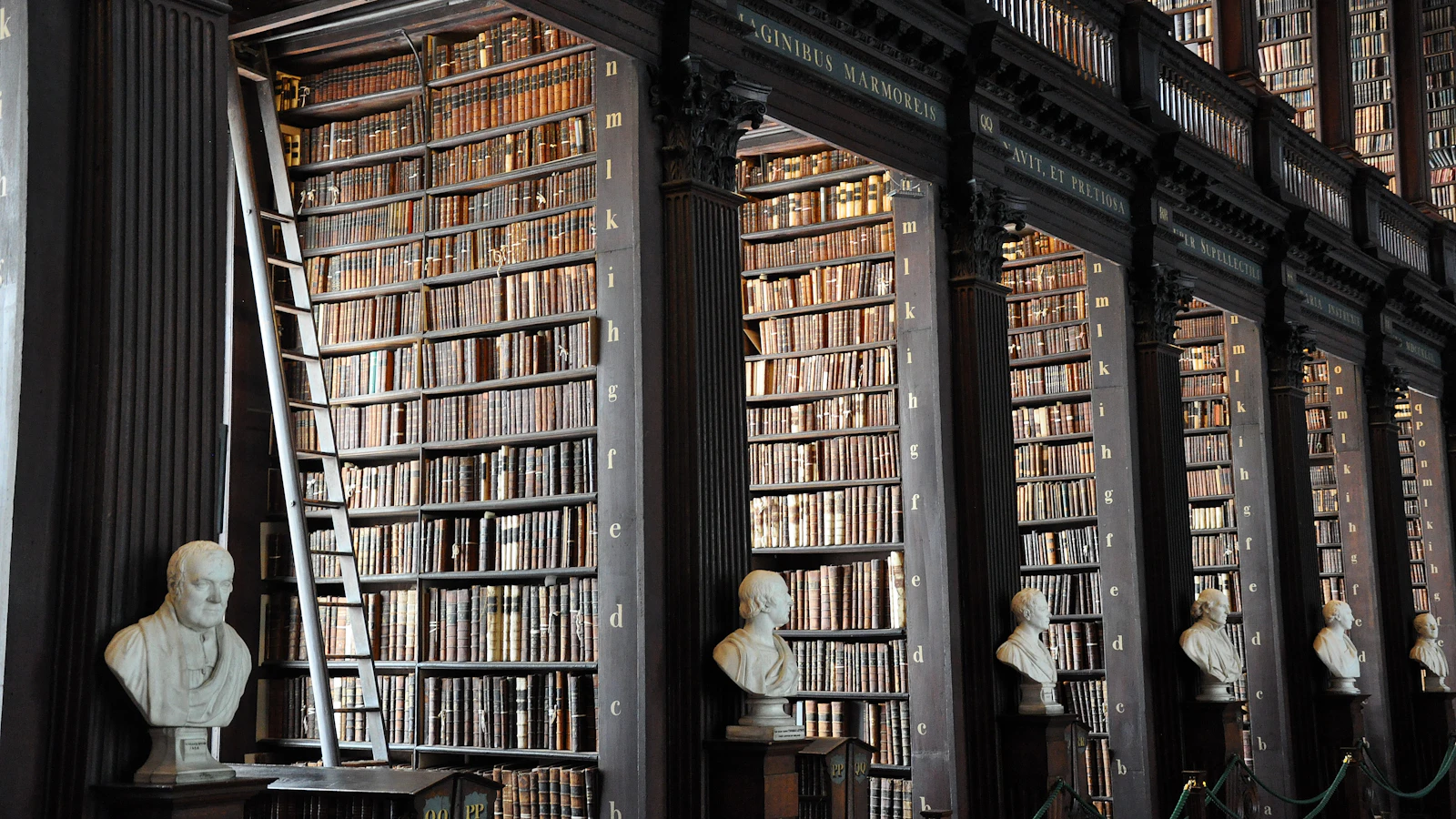
What Was the House of Wisdom?
The House of Wisdom was a library and centre of learning in Baghdad, the capital of the Abbasid Caliphate. According to Encyclopaedia Britannica, it is traditionally linked to the reign of Caliph al-Ma’mun (ruled 813 to 833), who strongly supported translation and scientific research. Its roots are often traced back to a royal library started under his predecessors, including Harun al-Rashid.
Historians do not agree on exactly how big or formal the institution was. Some picture a grand academy with lecture halls and an observatory. Others believe it was more modest: a palace library and a gathering place for translators and thinkers. What nobody disputes is that Baghdad in this period became a magnet for scholars, and that the work done there changed the history of science.
Why Baghdad? The Perfect Setting for a Knowledge Boom
Baghdad was founded in 762 by Caliph al-Mansur and quickly grew into one of the largest cities in the world. Several factors helped it become a knowledge capital:
- Trade and wealth: The city sat on major trade routes linking the Mediterranean, Persia, India and Central Asia, which brought money, ideas and people.
- Political support: Abbasid rulers treated learning as a mark of a great empire and paid for books, translators and observatories.
- Paper: Papermaking spread into the Islamic world in the eighth century. Paper was cheaper and easier to produce than parchment, so books could be copied in larger numbers.
- A mix of cultures: Muslim, Christian, Jewish and other scholars worked side by side, bringing different languages and traditions.
The Translation Movement: Moving Knowledge Between Languages
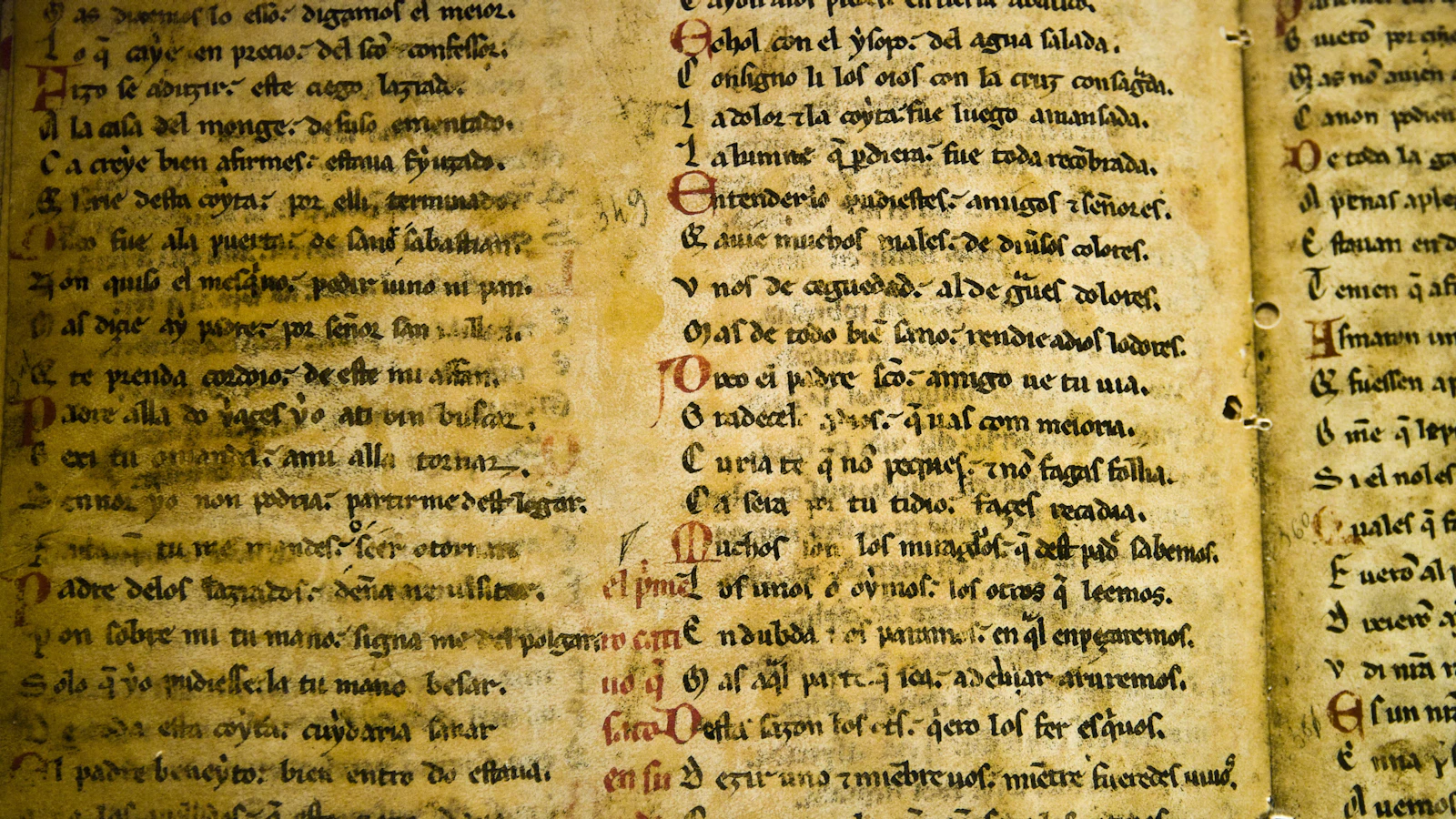
The heart of the story is the Graeco-Arabic translation movement, which lasted roughly from the eighth to the tenth century. Scholars collected manuscripts from across the known world and translated them into Arabic. Texts on medicine, astronomy, mathematics, philosophy and engineering were all in demand.
Hunayn ibn Ishaq, the master translator
Hunayn ibn Ishaq (about 809 to 873) was a Christian physician who knew Greek, Syriac and Arabic. He is remembered for translating many works of the Greek physician Galen and for setting high standards of accuracy, comparing several manuscripts to produce a reliable text. His methods influenced later translators.
The Banu Musa brothers
Three brothers known as the Banu Musa were wealthy patrons and gifted scientists. They funded the search for manuscripts and wrote their own works on geometry, mechanics and astronomy, including a famous book describing ingenious mechanical devices.
Great Minds Who Worked in Baghdad
The House of Wisdom was not only about copying old books. Scholars tested, corrected and extended what they received. A few of the best known names include:
- Muhammad ibn Musa al-Khwarizmi (about 780 to 850): A mathematician and astronomer whose book on calculation by completion and balancing (al-Jabr) gave algebra its name. His name, Latinised, also gave us the word algorithm. You can read more in Britannica’s biography of al-Khwarizmi.
- Al-Kindi (about 801 to 873): Often called the philosopher of the Arabs, he wrote on mathematics, optics, medicine and cryptography, including early methods of code breaking by frequency analysis.
- The Banu Musa: Authors of important works on geometry and mechanical devices.
- Astronomers under al-Ma’mun: Teams measured the length of a degree of the Earth’s meridian and produced improved astronomical tables.
What Did They Actually Achieve?
Mathematics
Al-Khwarizmi’s work introduced systematic methods for solving linear and quadratic equations. His writings on Hindu-Arabic numerals helped spread the decimal place-value system, the same number system most of the world uses today. Without it, everyday arithmetic would be far slower.
Astronomy and geography
Scholars compiled star tables, refined the astrolabe, and attempted to measure the size of the Earth. Their records made later navigation and calendar calculation more accurate.
Medicine and optics
Translated works of Galen and Hippocrates formed the base of medical teaching in Baghdad’s hospitals. Later scholars in the same tradition, such as Ibn al-Haytham, would transform the study of light and vision.
Preserving ancient texts
Many Greek works survived in Arabic translation, and some of them reached medieval Europe through Spain and Sicily, where they were translated into Latin. In this way, Baghdad acted as a bridge between ancient and modern science.
Myth vs. Reality: Separating Fact from Legend
Popular retellings sometimes overstate the story. It is worth keeping a few points in mind:
- It was not a lone miracle. Scholars in Persia, Syria, India, Egypt and elsewhere were already active, and many Baghdad scholars built on those traditions.
- It was not only translation. Original research, such as new algebra methods and improved astronomical observations, was a major part of the story.
- The details are debated. Historians still discuss the building’s exact size, structure and even how formal the name Bayt al-Hikma was in the early period.
The End of the House of Wisdom
In 1258, Mongol forces under Hulagu Khan besieged and captured Baghdad, ending the Abbasid Caliphate in the city. Chroniclers describe the destruction of libraries and the loss of countless books. A well-known tradition says the Tigris ran black with ink, though historians treat such vivid details with caution. Even so, the sack of Baghdad was a severe blow to the city’s intellectual life.
Why It Still Matters Today
The story of the House of Wisdom shows how progress often depends on openness: sharing ideas across languages, funding research, and respecting expertise from different backgrounds. Similar patterns appear throughout history. For example, our guide to Pre-Inca civilizations of Peru shows how earlier societies built the knowledge that later empires inherited, and our article on how LiDAR is revealing hidden Maya cities shows how modern technology keeps rewriting what we know about the past.
Frequently Asked Questions
What was the House of Wisdom?
It was a library and scholarly centre in Abbasid Baghdad where texts from many cultures were collected, translated into Arabic, and studied.
Who founded the House of Wisdom?
Its origins are linked to the early Abbasid caliphs, especially Harun al-Rashid, and it flourished under Caliph al-Ma’mun in the early ninth century.
Did the House of Wisdom invent algebra?
Al-Khwarizmi, who worked in Baghdad, wrote the first known book to treat algebra as a separate subject with systematic methods, and the word algebra comes from the title of his work. Earlier cultures, however, had solved algebra-like problems.
What happened to the House of Wisdom?
Baghdad fell to the Mongols in 1258, and many libraries and books were destroyed or scattered.
Summary
The House of Wisdom in Baghdad was a symbol of an age when curiosity was rewarded. Scholars like al-Khwarizmi, al-Kindi, Hunayn ibn Ishaq and the Banu Musa translated, tested and expanded the learning of many civilizations, giving us algebra, better astronomy, stronger medicine and a bridge that carried ancient knowledge into the modern world. Some details remain debated, but the legacy of the Islamic Golden Age is part of every classroom and laboratory today.
Disclaimer: This article is for general educational purposes. Historical details from the medieval period are based on surviving sources and are sometimes debated by scholars.