Every other Thursday, we’re trying out a new section – Rhys’s Pieces (had to, and I don’t even like peanut-butter chocolate…) – where we look at some of the week’s biggest gaming news and developments, injecting some Alinea estimates where we can.
As always, it’s been a busy news week for the industry. And we’ve still got tomorrow and the Wolverine discourse to go, so let’s get into it.
Sony has decided to part ways with Hideo Kojima Productions regarding publishing Physint, an espionage game that seemed to be the spiritual successor to Metal Gear – the IP that put Kojima on the map as one of the few well-known auteurs in game-making.
Xbox has swooped in for the PR win, springing off Sony’s PR miss – adding Physint to its slate alongside OD, Kojima’s upcoming horror game (which looks a lot like PT). Also, Xbox jumped in with its announcement of an official disc-to-digital conversion feature – a far more effective transition than Sony’s blunt “discs are gone in 2028” line. This approach clearly offers zero off-ramp for physical-first players. More on that later.
Sony’s decision to end the Physint partnership was quite abrupt, too, with the team reportedly told in mid-June that Physint was being cancelled.
On X, Kojima said the team “spent the last three months searching tirelessly for a new partner,” before landing on Xbox – a partner he says shares his vision for the future, and one he’s teaming up with again. We can read between the lines a bit there.
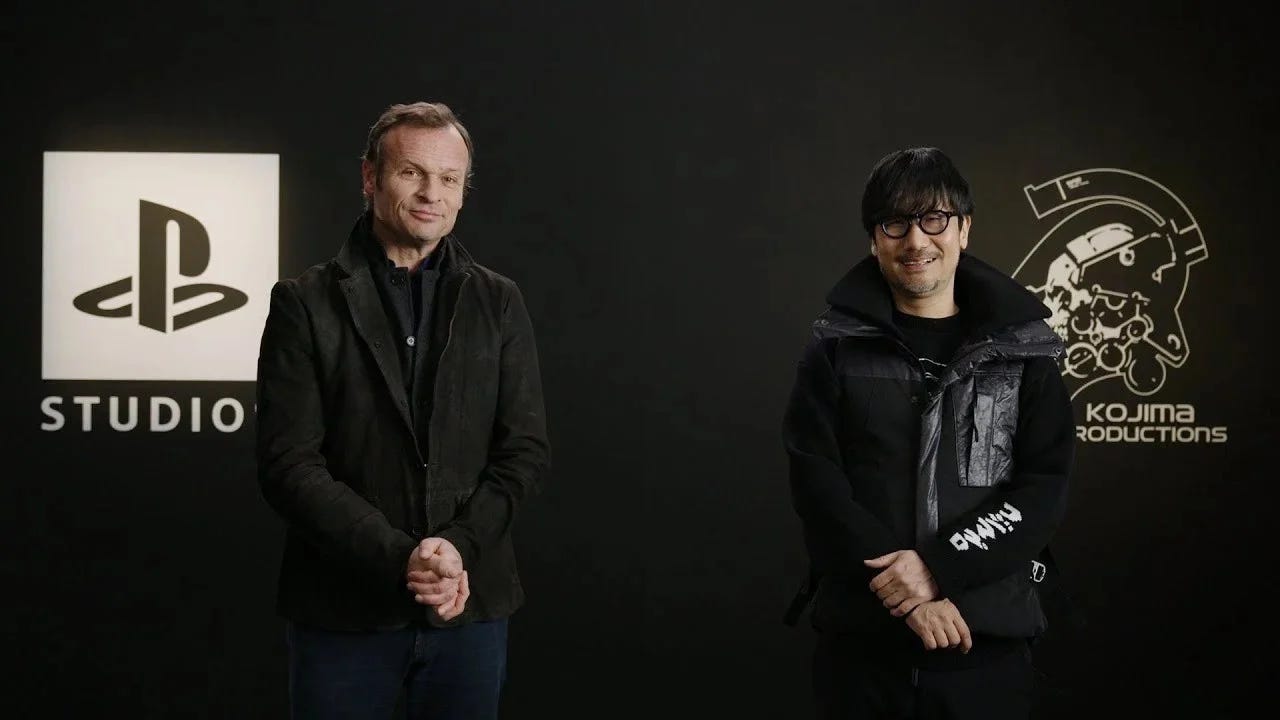
Some things worth noting, first:
-
Kojima understandably has a chip on his shoulder after what happened with Konami. He and many folks in the team have been burned by a publisher before.
-
Kojima loves plastering his name on his projects, and he’s struggled to take criticism in the past.
-
PlayStation genuinely helped him in the Kojima and the studio in the aftermath of the Konami fallout – Guerrilla handed over its Decima engine for Death Stranding and provided plenty of dev support.
-
We obviously don’t know the full story, either – maybe milestones were missed, maybe Kojima was difficult to work with, maybe any number of things. But that information isn’t public, and as it stands, this doesn’t look great for PlayStation among core gamers. Especially right now.
From a strictly financial perspective, though, I can understand Sony’s position. In a vacuum, anyway. PR and optics still matter. More on that later.
Our estimates show that Death Stranding 2, which launched on PS5 in June 2025 and on PC in March this year, just crossed 2.5M copies sold. It sold 1.8M on PlayStation and 700K on Steam. Across those platforms, DS2 has generated $170M.
On PlayStation, about 1M of those DS2 copies were sold by the first two months (722K in June 2025 and 381K in July 2025). This – of course – is the Kojima PlayStation core. In the months after, DS2 struggled to sell over 100K, and shifted under 30K in August, with price reductions to $40 doing little to move the needle.
Death Stranding 2 has made about $129M on PlayStation, with 65% of that coming in the first two months. On Steam, 550K copies sold in the first two months (80% of its Steam total). It’s had two discounts, which again did very little.
Meanwhile, the original Death Stranding has sold about 5M copies at this point in its lifecycle – though it did have some deep discounts down to $20 in that window. To date, Death Stranding 1 has generated about $243M, with 71% on PlayStation, 25% on Steam, and 4% on Xbox.
In other words, in the decade since Death Stranding was announced at E3 2016, the two Death Stranding games have generated about $413M in revenue for Sony across platforms – with Death Stranding 2 returning less than the first (so far).
Ballpark math: word on the street is that the first Death Stranding cost about $100M to make, and the second somewhere in the $150M–$200M ballpark (longer dev cycle, COVID, and all that). Depending on marketing overhead and the opportunity cost of pulling those Guerrilla developers onto DS1, the franchise has almost certainly broken even – but not by much.
That said, Death Stranding has been a real success in China via Steam (DS1 has 27% of its Steam user base in China, while DS2 has 44%). Also, Stellar Blade, another second-party PS game, has a 46% China Steam audience.
So by moving away from Steam, PlayStation loses this Trojan horse into China. It would prefer to lock Chinese players into its own ecosystem – but PlayStation barely has an official foothold in China, so Steam was its way in.
So while an estimated return on investment of 18% to 38% does amount to several tens of millions in margin, that’s not really a lot for a company like PlayStation – not for that kind of budget. And margins are the name of the game now.
Over the past few years, scares like Concord (cancelled, $300M+ down the drain) and softer sales from the likes of Marathon (1.8M sold), Saros ($40M), Marvel Tokon (725K, $49M), and Lego Horizon Adventures (under 250K across Steam and PS5, $11M) seem to be making PlayStation more wary about its projects.
Today, Sony lifted the press embargo on Wolverine, its big tentpole game from one of its premier studios. It’s had a lukewarm critical reception (by PlayStation prestige and Insomniac standards) – currently 78 on Metacritic, same as the Days Gone Remaster. It’ll sell well all the same, but still…
Guerilla recently went back to the drawing board for the Horizon live-service game, and even the latest Naughty Dog game has been delayed several times and is reportedly a while away from completion.
While Sony has had a few misses since the end of 2022, it’s also had some hits:
-
Ghost of Yotei (5.3M sold, $400M in gross revenue)
-
Astro Bot (4.5M, $275M revenue, and a GOTY win)
-
Stellar Blade (5.3M, $309M in revenue), but it won’t be publishing Stellar Blade 2
-
The BIG one: Spider-Man 2 ($1.3 billion across platforms)
As for PS Studios titles from the past three years that made over $125M on PS5, there are seven as per our estimates. We’ve also broken out the physical splits, because a lot of the reporting there – including ours tbf – has zoomed in on the copies-sold split.
The disc decision was largely about margins, control, and killing the secondhand market. So let’s look at what actually matters to PlayStation here, revenue via discs:
Clearly, physical is still a huge chunk of the revenue for these games. And it’s all more concentrated on the kinds of games PlayStation is built on.
The prestige single-player games skew physical, with Astro Bot at 47%, Stellar Blade at 43%, DS2 at 42%, and Yotei at 38%. Helldivers 2, more live-service and online is only at 8% (although, Sony basically didn’t market the game pre-launch and printed a limited disc run, not expecting a success).
But still, physical revenue is huge in the prestige single-player games Sony is getting more cautious about. A disc dollar is worth less to Sony than a digital one, as there’s the retailer cut, manufacturing and distribution. A consideration.
Helldivers’ incredible performance on PS5 – almost 23M sold, $800M in revenue, and still 1M monthly players on PS – is a big part of why Sony keeps gunning for another live-service hit (preferably first-party, not second-party) to give it annual recurring revenue for when a hit-driven prestige period gets rough.
Although live-service is pretty much zero-sum when it comes to PvP, so winning players can be difficult. Still, PlayStation wants these revenues. It sees how much third-party publishers rake in through FC, Fortnite, and Roblox, and on those it only takes its store cut. That’s 30%; 100% would be nicer, despite the budgetary price of admission (see: Concord…).
On the death of the disc: while it makes sense for PlayStation to take this hit now, rather than at the launch of the PS6, the backlash among a lot of core players – those high-ARPU folks – has been bloody intense. Which is ironic, given the decision was made to maximise ARPU in the first place.
And while we don’t know the full story behind why Physint was dropped, the timing is terrible for PR: Wolverine is literally out this week, and the backlash to the death of physical has been louder than Sony would have expected.
I’ve seen people say PlayStation will lose players over these decisions. It’ll certainly lose some – but it’s playing the long game. It wants to set the bar now, ahead of the PS6, so the backlash doesn’t bleed into that generation – most importantly because of the rumoured handheld component of it all.
Giving PlayStation players another avenue to play – i.e., on the go – gives them another touchpoint to spend. Like all entertainment and social media companies, gaming is fighting for attention share. The attention economy is completely oversaturated with subscriptions, feed-based video, and distractions galore.
Time means money – and Valve has seen Steam Deck owners’ purchases on Steam rise once they get the device. I know I’m in that group.
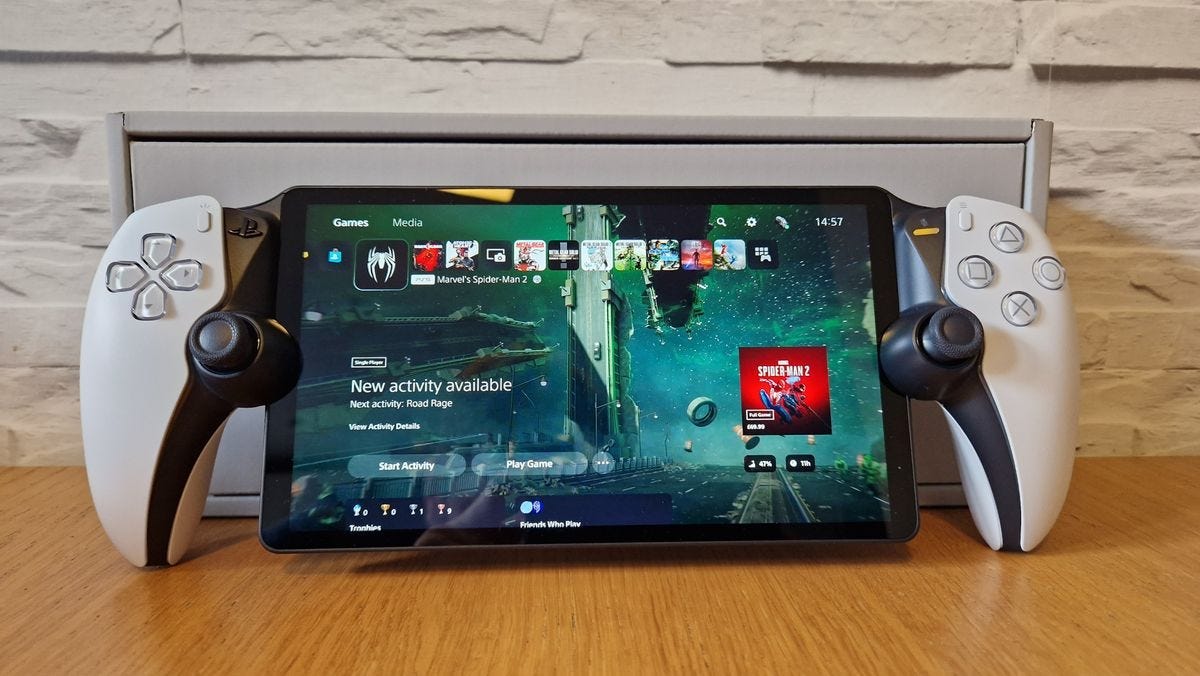
That device will also be digital-only, so I understand why PlayStation is ripping the band-aid off now. But these things cascade – so the PR miss of Xbox scoring off Sony’s stumbles could have been avoided, I reckon.
Millennials worldwide shed a happy tear during this week’s Zelda Nintendo Direct, as Nintendo showed off some early-game footage of the Ocarina of Time remake (played by none other than Aonuma himself), and it looks gorgeous.
There’s so much nostalgia here. It’s essentially a 1:1 remake of the seminal 1998 classic – which remains the #1 top-scoring game on Metacritic, by the way – with some stunning visual upgrades (I like ‘em, anyway!), quality-of-life improvements, and a jump button (!!!).
We covered why remakes are such a popular strategy right now in the past, but the gist is that they’re less risky (there’s a primed fanbase and a design guideline already built in), and Ocarina of Time’s legendary status has an air of mystery around it.
The project will also help Nintendo train its future leaders – a key strategy in Japan. It’s also part of why FromSoftware and Capcom have been so successful. One benefit of the Japanese development scene is the institutional knowledge, as developers are way less likely to get fired after shipping compared to the US…
And there’s a tonne of millennials who played the original Ocarina of Time and now have kids who are about 10. A lot of those kids have played Breath of the Wild and Tears of the Kingdom. Their parents will want to play OoT again for the nostalgia – but they’ll also want their kids to check it out.
While Ocarina of Time is fantastic (it still holds up), and one of the most revered games of all time for a certain age of gamer, it ‘only’ sold about 15M copies across the N64 and the 3DS remake. Meanwhile, Breath of the Wild has sold about 34M copies, and Tears of the Kingdom 23M.
So there are plenty of folks who played the Switch-era Zeldas but never touched the original OoT. Plenty of those kids are also a prime audience for the Legend of Zelda movie, and Nintendo benefits from having the OoT remake around during that film’s launch. While there are Switch 2 editions of Breath of the Wild and Tears of the Kingdom, plenty of the film’s audience will already own those games – at least on the original Switch.
In fact, the OoT reveal seemed geared towards those unfamiliar with OoT, going out of its way to stress that the jump button is a big deal, and that it’s a different, more linear kind of game than BotW and TotK.
But if the movie ties into OoT’s story – which I think it will, more than the lighter story notes in the Switch Zeldas anyways – Ocarina of Time would be the ultimate companion. The ‘’trouble’’ is, it’s only on Switch 2, so it should boost some Switch 2 sales even after OoT lands.
Of course, hordes of millennials will also buy Switch 2s simply to replay this childhood classic. However, it’s launching two weeks before GTA, another favourite of millennials. Although, given Ocarina of Time‘s prestige, the high number of kids on Steam, the popularity of the Zelda brand in general, and the number of PC owners who also have a Switch (but are too smug to buy a console), OoT can still compete here.
Everybody else has cleared the hell out of the way of GTA’s blast radius, so the OoT Remake might be one of the only games that could withstand GTA. The sheer force of Zelda’s legacy gives it a unique market resilience.
And if the movie does half as well as the Mario ones, OoT will help spark Switch 2 sales in 2027 as well. That matters too, because Pokémon – a franchise at its absolute peak – is right around the corner, and it’ll be a huge cash influx for Nintendo, plus a system seller for the many Pokémon sickos (generations’ worth) out there right now.
So yeah, Ocarina of Time is going to be huge for Switch 2, it’s a nice precursor to 2027’s Pokémon, and it sets up an eventual 3D Mario and Smash further down the line.
And that’s the end of the first Rhys’s Pieces! Let me know if there are any other topics or Alinea data deep-dives you want us to cover. Oh – and chocolate and peanut butter is an abomination. Especially American chocolate. Butyric acid, no thanks!
We’re offering a free trial of our platform for games companies. Send us a message here, or reply right here on Substack/email, and we’ll set you up.
Reply to this email – or reach out here – if you have any feedback for the newsletter – or want to request a game for us to cover.
[Alinea Analytics boasts the most accurate PC and console estimates in the business. Game makers use our platform to understand their audience, keep an eye on the competition, monitor sales trends, and spot new opportunities. We equip game studios and financial institutions with accurate data and the confidence to make smarter, data-driven decisions. Want to talk about all things games market data? We’d love to chat!]