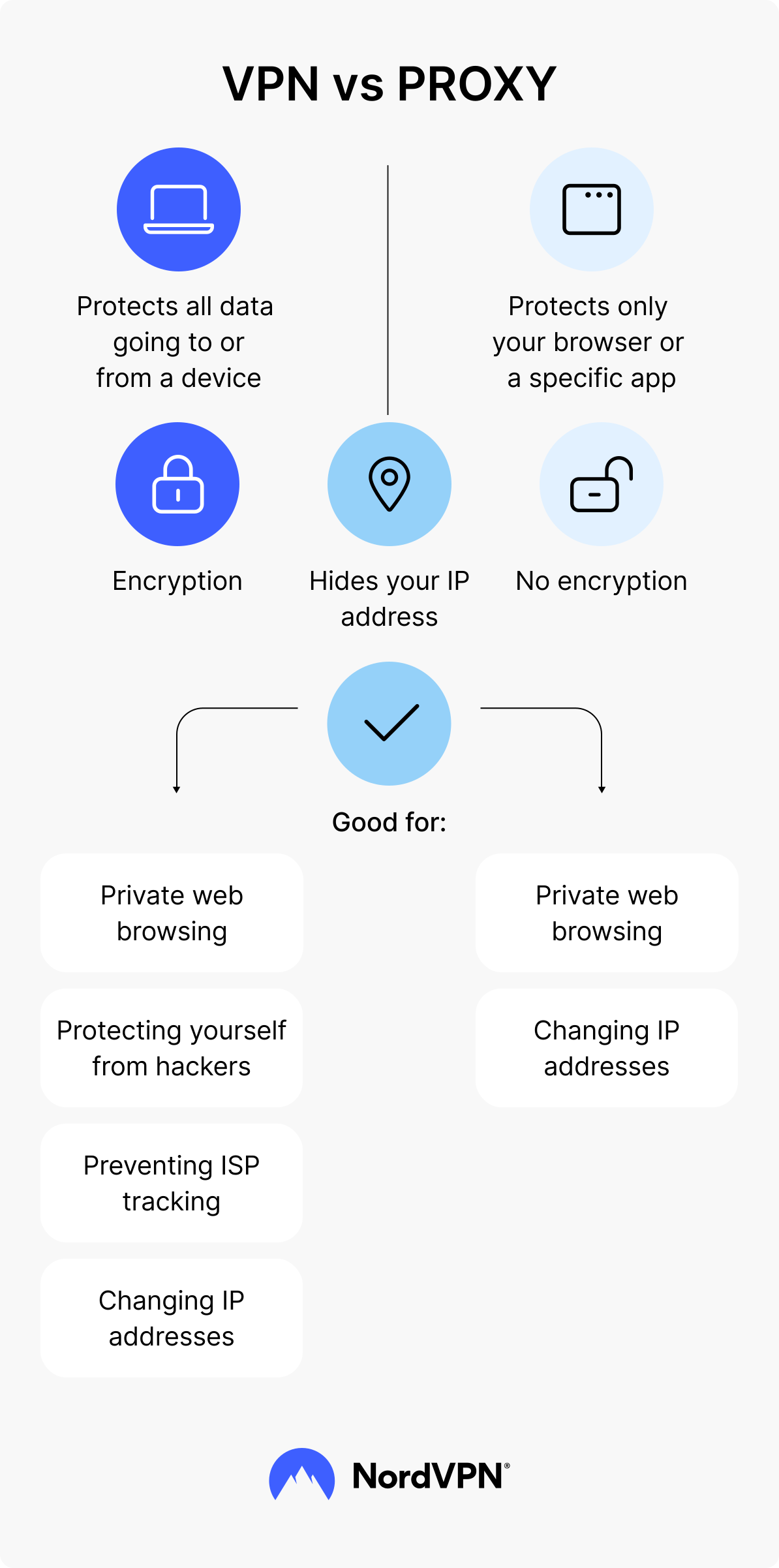
What is the difference between Vpn And Proxy Server? A VPN encrypts your internet connection for security, while a proxy server masks your IP address to provide anonymity. VPNs offer comprehensive online privacy, whereas proxies are less secure.
VPNs and proxy servers serve different purposes in online security and privacy. A VPN (Virtual Private Network) encrypts your entire internet connection, ensuring all data transmitted is secure and private. This encryption shields your online activities from hackers and surveillance.
In contrast, a proxy server is an intermediary between your device and the internet, masking your IP address to provide anonymity. While proxies can hide your location, they do not offer the same level of security as VPNs. Proxies are typically faster but less secure. Understanding these differences helps choose the right tool for your online privacy needs.
How They Work
Understanding the workings of a VPN and a Proxy Server is crucial. Both serve the purpose of hiding your IP address. Yet, their mechanisms are quite different. Let’s dive into how each one operates.
Vpn Mechanism
A VPN creates a secure tunnel between your device and the internet. All data passes through this tunnel. The VPN server encrypts your data. This encryption makes it unreadable to third parties. Your IP address is also masked. You appear to browse from the VPN server’s location.
Here are the key steps:
- Your device connects to a VPN server.
- The VPN server encrypts your data.
- The encrypted data travels through a secure tunnel.
- Data reaches the destination website.
- The website sees the VPN server’s IP, not yours.
This method provides high security and privacy. It’s ideal for protecting sensitive information.
Proxy Server Mechanism
A Proxy Server acts as an intermediary between your device and the internet. It forwards your requests to the web. The website sees the proxy server’s IP, not yours. Unlike a VPN, a proxy does not encrypt your data.
Here are the key steps:
- Your device sends a request to the proxy server.
- The proxy server forwards your request to the website.
- The website sends the data back to the proxy server.
- The proxy server forwards the data back to you.
This method is faster but less secure. It’s suitable for bypassing content restrictions.
| Feature | VPN | Proxy Server |
|---|---|---|
| Data Encryption | Yes | No |
| IP Masking | Yes | Yes |
| Speed | Slower | Faster |
| Security | High | Low |
Both VPNs and Proxy Servers have their uses. Choose based on your needs for security and speed.
Credit: nordvpn.com
Use Cases
Understanding the different use cases of a VPN and a proxy server is vital. Each tool serves unique purposes and benefits users in various ways. Knowing these can help you choose the right one for your needs.
Common Vpn Scenarios
- Secure Remote Access: VPNs are ideal for accessing work networks securely from home.
- Bypass Geo-Restrictions: VPNs let you access content blocked in your region.
- Public Wi-Fi Security: VPNs protect your data when using public Wi-Fi networks.
- Data Encryption: VPNs encrypt your internet traffic, ensuring privacy and security.
- Anonymous Browsing: VPNs hide your IP address, enabling anonymous web browsing.
Common Proxy Server Scenarios
- Access Blocked Websites: Proxy servers help you visit websites restricted in your area.
- Bypass School or Work Filters: Proxies allow access to sites blocked by school or work.
- Speed Optimization: Some proxies cache data to improve internet speed.
- Hide IP Address: Proxy servers mask your IP, providing a layer of anonymity.
- Web Scraping: Proxies are often used for gathering data from websites.
| VPN Use Cases | Proxy Server Use Cases |
|---|---|
| Secure Remote Access | Access Blocked Websites |
| Bypass Geo-Restrictions | Bypass School or Work Filters |
| Public Wi-Fi Security | Speed Optimization |
| Data Encryption | Hide IP Address |
| Anonymous Browsing | Web Scraping |
Pros And Cons
Understanding the pros and cons of VPNs and proxy servers can help you choose the right tool. While both offer anonymity and security, their functionalities differ.
Advantages Of Vpn
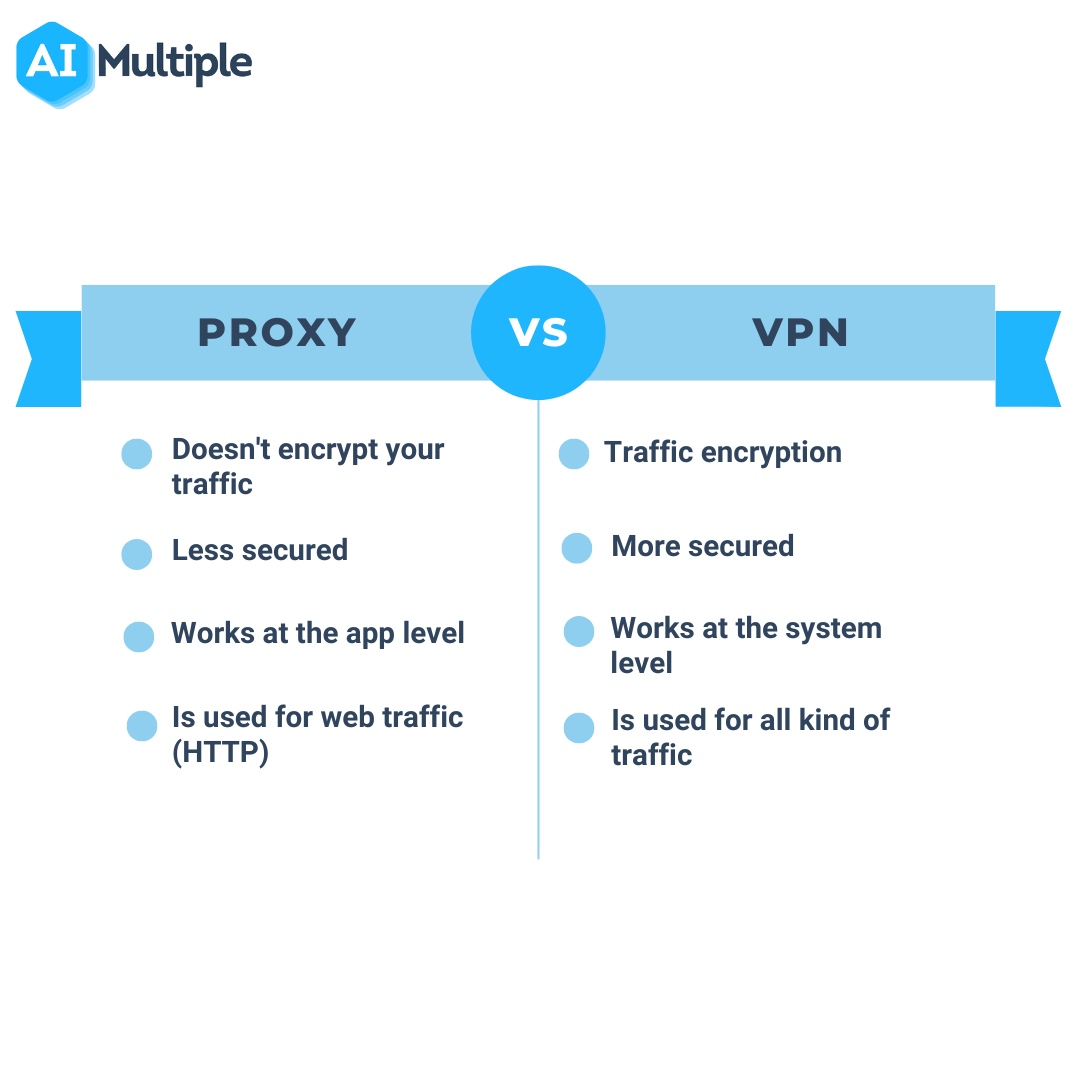
- High-Level Security: VPNs encrypt all your internet traffic.
- Access Restricted Content: VPNs allow access to geo-blocked websites.
- Privacy Protection: VPNs hide your IP address from websites.
Advantages Of Proxy Server
- Fast Performance: Proxy servers can be faster due to caching.
- Bypass Restrictions: Proxies can bypass certain website restrictions.
- Simple Setup: Proxies are easy to configure and use.
Drawbacks Of Vpn
- Reduced Speed: VPNs may slow down your internet connection.
- Subscription Costs: Good VPN services often require a subscription fee.
- Complex Setup: VPNs can be harder to set up than proxies.
Drawbacks Of Proxy Server
- Limited Security: Proxies do not encrypt your internet traffic.
- Privacy Issues: Proxies may log your internet activities.
- Compatibility Problems: Some websites may block proxy servers.
Credit: research.aimultiple.com
Frequently Asked Questions
Does A Vpn Bypass A Proxy Server?
Is It Better To Use A Vpn Or A Proxy Server?
Should I Use A Vpn Or Residential Proxy?
How Do I Know If I Have A Vpn Or Proxy?
Conclusion
Understanding the difference between VPNs and proxy servers can improve your online privacy and security. VPNs encrypt your data, while proxy servers mask your IP address. Choose the right option based on your needs. Stay informed and protect your online activities effectively.
Your digital security matters.