Picture a bottle whose neck bends around, passes through its own side and opens into its base. Now imagine that there is no inside and no outside, and that an ant walking along the glass could reach “the other side” without ever crossing an edge. That is the Klein bottle, one of the most famous oddities in mathematics. It looks like a puzzle, but it teaches a surprisingly practical lesson: some things in the world cannot be neatly split into two sides.
Thank you for reading this post, don't forget to subscribe!In this guide we explain the Klein bottle in plain English, with no heavy math. You will learn what it is, how it relates to the Möbius strip, why it needs four dimensions to exist properly, and why people use it as a metaphor for paradoxes in everything from topology to politics.
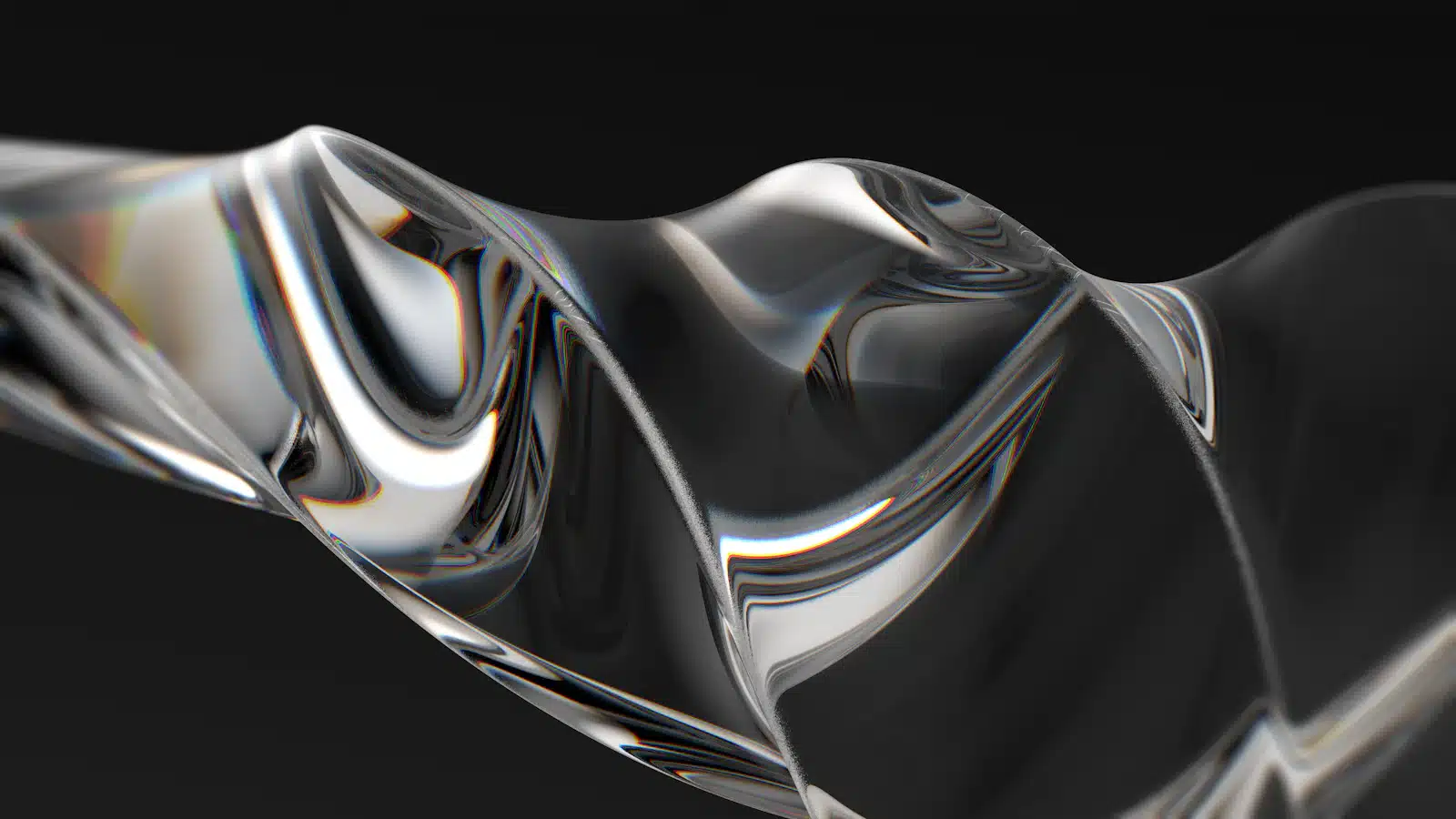
What Is a Klein Bottle?
A Klein bottle is a surface with no distinct inside or outside. Mathematicians call it a non-orientable surface, which is a precise way of saying that you cannot consistently define “left and right” or “up and down” across the whole shape. According to the Wikipedia entry on the Klein bottle, it is a two-dimensional surface, which is why we call it a surface rather than a solid object. Think of the skin of the bottle, not the glass or the space it holds.
The shape was first described in 1882 by the German mathematician Felix Klein. A popular story says the name began as Kleinsche Fläche (“Klein surface”) and was later misread as Kleinsche Flasche (“Klein bottle”). Historians treat that as a likely explanation rather than a certainty, but it explains why a flat idea ended up with a bottle’s name.
A bottle that is not really a bottle
A normal drinking glass has a rim, an outside and an inside. If an ant wants to get from one side to the other, it has to climb over the rim. A Klein bottle has no rim. The surface simply continues, and a traveler can move from what looks like the outside to what looks like the inside without crossing any boundary. In everyday objects, that is impossible, which is exactly why the Klein bottle feels like a trick.
Start With the Möbius Strip
The easiest way to understand a Klein bottle is to meet its simpler cousin first. Take a long strip of paper, give it a half twist and tape the ends together. You have made a Möbius strip. If you draw a line down the middle with a pencil, you will end up back where you started without ever lifting the pencil, and you will have marked both “sides” of the paper. That is because the strip has only one side.

A Möbius strip still has an edge, though: one single edge that runs all the way around. The Klein bottle removes that edge too. In the words of a University of Amsterdam math blog post, gluing two Möbius strips together along their edges produces a Klein bottle. In short: a Möbius strip has one side and one edge, while a Klein bottle has one side and no edge at all.
- Cylinder: two sides, two edges.
- Möbius strip: one side, one edge.
- Klein bottle: one side, no edge.
- Sphere: two sides, no edge (an ordinary, orientable surface).
A neat fact: if you slice a Klein bottle in half along its line of symmetry, you do not get two bottles or two bowls. You get two Möbius strips that are mirror images of each other. That cut shows how closely the two shapes are related.
How to Build a Klein Bottle on Paper
Topologists often describe shapes as flat rectangles with gluing instructions. Mathematicians at Brown University explain that a Klein bottle starts with a rectangle: you attach one pair of opposite sides with a twist and the other pair without a twist. If you glue both pairs without any twist, you get a donut shape (a torus). The single twist is what changes everything.
You can read the full construction, with diagrams, in the Brown University chapter on Möbius bands, projective planes and Klein bottles. It is a great next step if you like seeing how the pieces fit together.
Why a Klein Bottle Needs Four Dimensions
Here is the catch. In our three-dimensional world, you cannot build a true Klein bottle without the surface passing through itself. Every glass model you see in a museum or science lab has a spot where the neck seems to pierce the wall. That crossing is a limitation of our 3D space, not a feature of the real mathematical object.
In four spatial dimensions, the surface has enough extra room to loop around without touching itself. Mathematicians say the Klein bottle can be embedded in 4D space but only immersed (with self-intersection) in 3D. A good analogy is drawing a cube on paper: the flat drawing needs crossing lines that the real cube does not have. The glass Klein bottle is a 3D “drawing” of a 4D shape.

The University of Colorado physics demonstration page describes the glass Klein bottle as a tangible example of a surface with no distinct inside or outside, which is exactly how teachers use it in classrooms. You can read more on their Klein bottle demo page.
Cool Mathematical Properties
- It is a closed surface. It has no boundary, like a sphere, but unlike a sphere it is non-orientable.
- Its Euler characteristic is zero. This is a number topologists use to classify surfaces, and the Klein bottle shares it with the torus.
- Map coloring is different. On a Klein bottle, six colors are enough to color any map so that neighboring regions never share a color, which makes it an exception to the usual pattern for surfaces of its kind.
- Traveling around it flips you. A traveler who follows the right path returns to the start mirror-reversed, as if turned upside down.
That last property is the heart of the idea. The Harvey Mudd College math fun-facts page notes that mathematicians like to classify all possible two-dimensional surfaces, and the Klein bottle takes its place on that list next to the projective plane as another non-orientable surface. You can browse the Harvey Mudd Klein bottle page for a short, friendly explanation.
Can a Klein Bottle Hold Water?
People often ask this, and the honest answer depends on whether you mean the math or the glass. The mathematical Klein bottle has no inside, so there is nothing to fill. A glass Klein bottle sold as a science toy is different: it is a real object with a real cavity, so it can hold liquid, but it is not a true Klein bottle because the glass wall crosses itself in three dimensions.
Why the Klein Bottle Explains Paradoxes in Politics
Writers and thinkers love the Klein bottle as a metaphor. We often think in terms of two sides: left and right, inside and outside, us and them. The Klein bottle is a reminder that some systems do not have clean sides. Follow a position far enough and you may end up on the opposite side without ever crossing a border.
We explored this idea in a related article on our site, How Voting Is Like a Klein Bottle, where the shape is used to think about how group choices can loop back in surprising ways. It is a metaphor, not a scientific claim, but it shows how a mathematical idea can sharpen the way we talk about everyday problems.
The same spirit appears in other recent math stories. If you enjoy how mathematicians test the limits of intuition, read AI Proved the Quasi-Riemann Hypothesis. What Happens Now? and How Does Life Unfold? A Landscape Metaphor Comes Into Its Own. Both show how a good picture can make an abstract idea easier to grasp.
How to Explore Klein Bottles Yourself
- Make a Möbius strip. Twist a paper strip once, tape it, and draw a line down the middle until it meets itself.
- Cut it down the middle. Instead of two loops, you get one longer loop. It is a great way to feel non-orientability.
- Watch a 3D model rotate. Search for animated Klein bottle models and notice the spot where the surface crosses itself.
- Visit a science museum. Many have glass Klein bottles on display.
Frequently Asked Questions
What is a Klein bottle in simple words?
It is a closed surface with only one side and no edge. You can travel along it and end up on what looks like the opposite side without crossing a boundary.
Is a Klein bottle real?
It is a real mathematical object. A perfect version exists in four dimensions, while the glass versions in our 3D world are approximations that pass through themselves.
What is the difference between a Möbius strip and a Klein bottle?
A Möbius strip has one side and one edge. A Klein bottle has one side and no edge. Gluing two Möbius strips along their edges produces a Klein bottle.
Who invented the Klein bottle?
Felix Klein, a German mathematician, first described it in 1882.
Summary
The Klein bottle is a one-sided, edgeless surface that cannot be built in ordinary 3D space without crossing itself. It grows out of the Möbius strip, lives comfortably in four dimensions, and gives mathematicians a clear example of a non-orientable surface. Beyond math, it serves as a handy picture for situations where “inside” and “outside” blur together. The next time you see a twisted glass bottle in a science shop, you will know you are looking at a shadow of a four-dimensional idea.
Educational note: this article is a simplified introduction to topology for general readers. For formal definitions and proofs, consult a university-level topology textbook or the sources linked above.