For roughly 1,400 years, nobody on Earth could read the writing carved on the walls of Egyptian temples and tombs. The symbols of birds, eyes, reeds, and snakes looked like pure decoration, or perhaps a secret religious code. Then, in 1799, soldiers repairing a fort in the Nile Delta pulled a broken black slab out of the ground, and one of history’s greatest puzzles began to unravel. This guide explains the story of deciphering the Rosetta Stone: what the stone is, how Thomas Young made the first breakthroughs, and how Jean-François Champollion finally unlocked the language of the pharaohs.
Thank you for reading this post, don't forget to subscribe!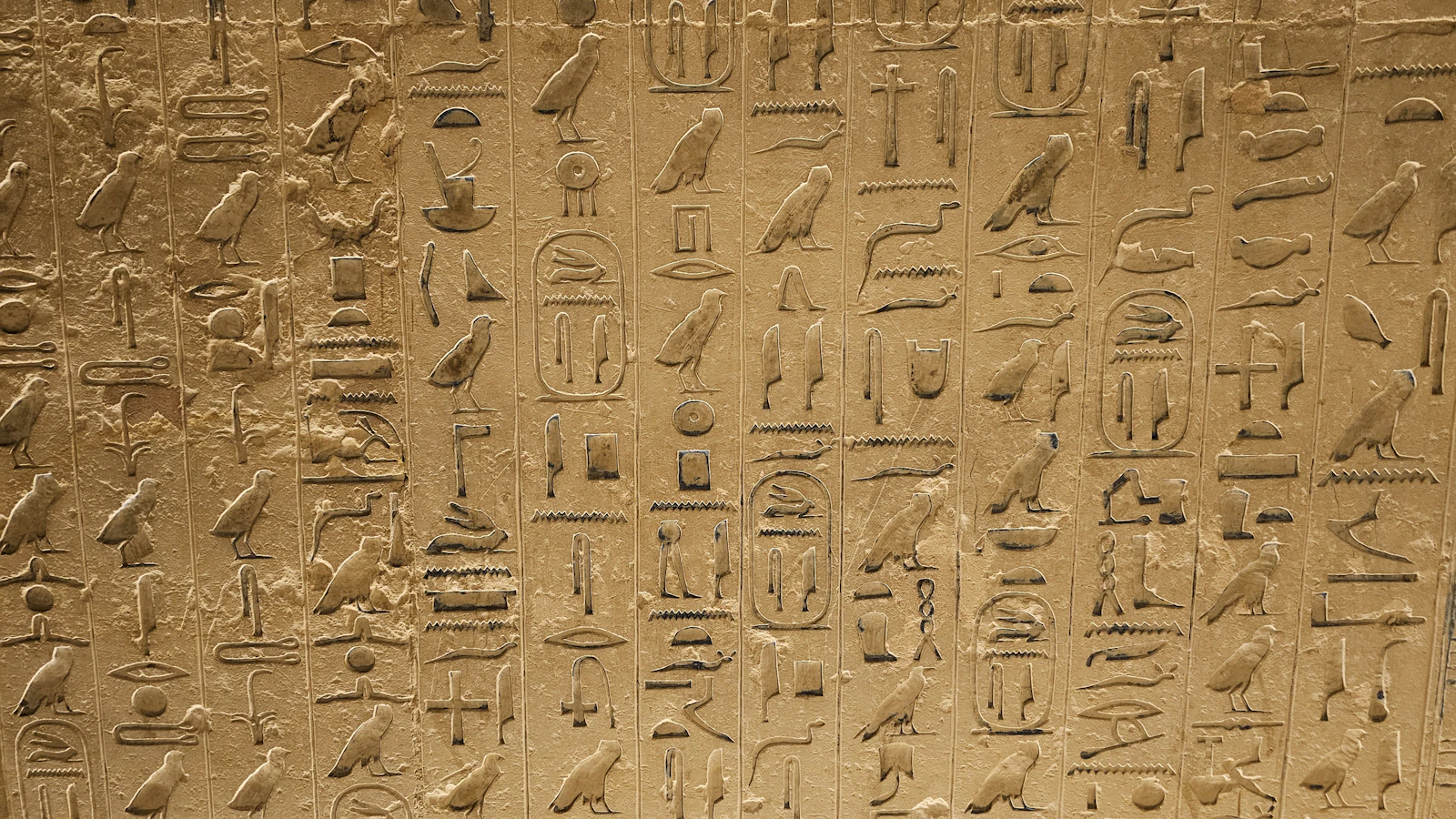
What Is the Rosetta Stone?
The Rosetta Stone is a fragment of a larger granodiorite stela, a stone slab carved with an official announcement. According to the British Museum, which has displayed it since 1802, the surviving piece measures about 112 centimetres high, 76 centimetres wide, and 28 centimetres thick, and weighs roughly 760 kilograms. The top of the slab is broken, so part of the text is missing.
What makes the stone special is not its beauty but its content. It carries the same message three times, in three different scripts:
- Egyptian hieroglyphs: the formal, sacred script used for religious and royal texts (14 surviving lines).
- Demotic: a fast, cursive form of Egyptian used in everyday administration (32 lines).
- Ancient Greek: the language of the Ptolemaic rulers and their officials (54 lines).
Scholars of the early 1800s could still read Greek. If the three texts said the same thing, the Greek could act as a key to the other two. That simple idea is why the name “Rosetta Stone” is now used for any clue that unlocks a hard problem.
What Does the Rosetta Stone Actually Say?
Disappointingly for treasure hunters, the text is not a poem or a secret. It is a decree issued in 196 BC by a council of priests gathered at Memphis. They were honouring the young king Ptolemy V on the first anniversary of his coronation. The decree lists the taxes he had cancelled, the temples he had supported, and the duties the priests promised to perform in return, including setting up copies of the decree in temples across Egypt. In other words, it is a piece of political public relations, and the stone is one surviving copy.
How the Stone Was Found
In July 1799, during Napoleon Bonaparte’s military campaign in Egypt, French soldiers were strengthening an old fortress near the town of Rashid, which Europeans called Rosetta. An officer named Pierre-François Bouchard noticed the inscribed slab built into an old wall and realised it might be important. Napoleon had brought a team of scholars with him, and they quickly made copies of the inscriptions.
The French lost the war, and under the terms of the 1801 surrender the stone passed into British hands. It reached England in 1802 and went on display at the British Museum, where it remains one of the most visited objects in the collection. Before the stone left Egypt, scholars had already printed copies of the inscriptions, so researchers in France, Britain, and Sweden could start work right away.
Why Hieroglyphs Were Forgotten
Hieroglyphs were used for more than 3,000 years. After Egypt came under Greek and then Roman rule, Greek became the language of government, and the old temple priesthood slowly faded. The last known hieroglyphic inscription, at the temple of Philae, dates to the late fourth century AD. Once the priests who could write the script were gone, the knowledge vanished. Later writers, including some in ancient Greece and Rome, wrongly assumed that every sign was a picture standing for an idea, so for centuries people tried to “read” hieroglyphs as symbolic riddles. That wrong assumption kept scholars stuck for a very long time.
Thomas Young: The First Breakthroughs
Thomas Young (1773-1829) was an English physician and physicist best known for his experiments on light. He was also a gifted linguist who took up the Rosetta Stone as a side project. Around 1814 he began comparing the Greek text with the Demotic one, matching words by how often they appeared. Young made several real discoveries:
- He worked out which Demotic groups matched Greek words and could identify many of them.
- He realised that Demotic was not purely symbolic, and that it was closely related to hieroglyphs.
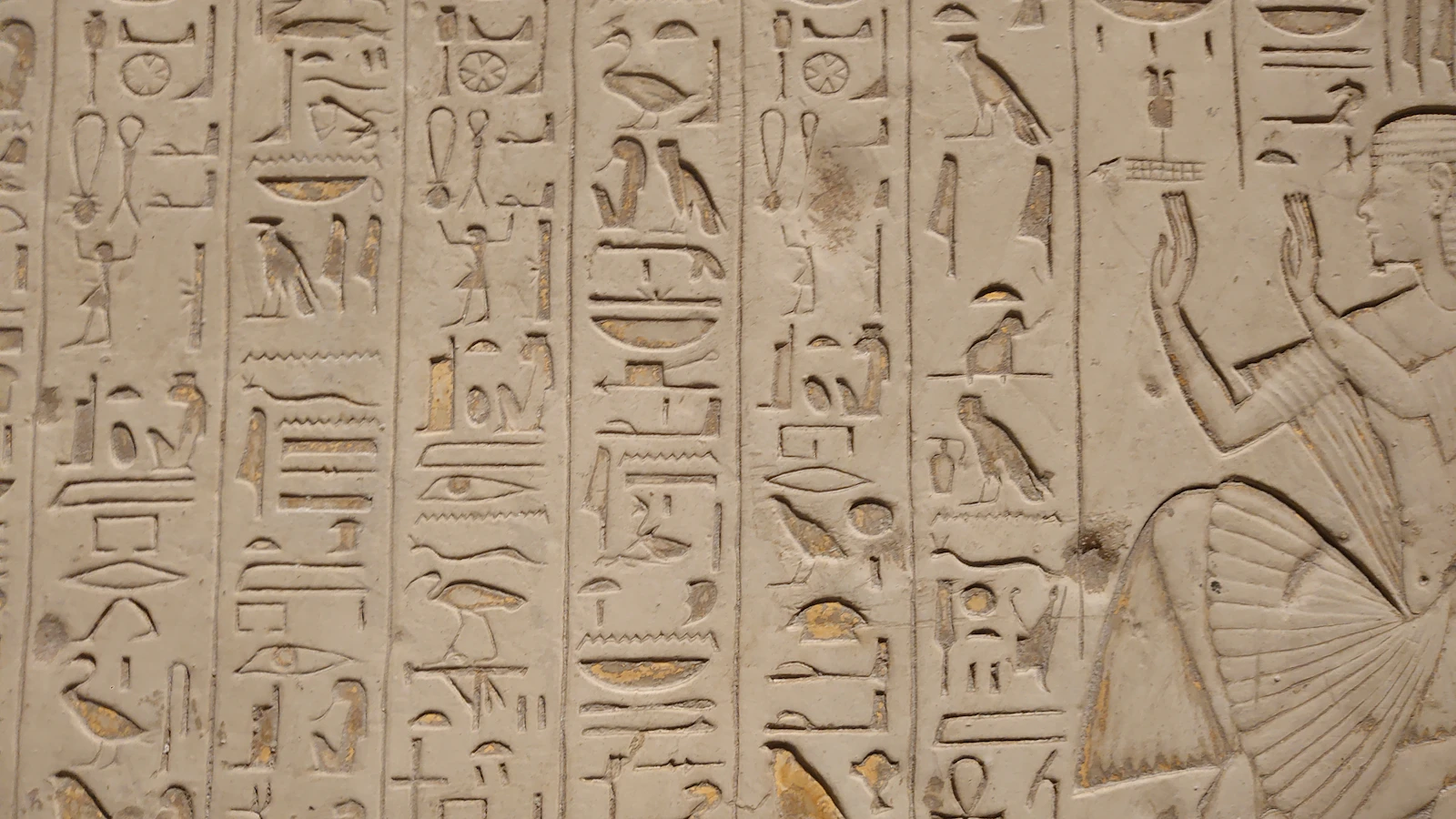
- He noticed that royal names in hieroglyphic text were enclosed in oval rings, now called cartouches.
- He correctly matched the cartouche containing the name of Ptolemy with its sounds, and identified a few other signs, including the one for the female ending used in Berenice’s name.
Young published much of this in 1819 in an article on Egypt for the Encyclopædia Britannica supplement. His key insight was that hieroglyphs could represent sounds, at least in foreign royal names. His limit was a belief that this phonetic use applied only to such foreign names, and that ordinary Egyptian words were still written with purely symbolic signs. That assumption stopped him from going further.
Jean-François Champollion: Cracking the System
Jean-François Champollion (1790-1832) was a French scholar who had been fascinated by Egypt since boyhood. He was a prodigy with languages, and he studied Coptic, the last stage of the Egyptian language, which was still used in Christian worship in Egypt. This turned out to be the vital ingredient. Coptic let him guess how ancient Egyptian words might have sounded.
Champollion built on the cartouche of Ptolemy and added more royal names, including Cleopatra, which he could compare using a bilingual obelisk from the island of Philae (that was transported to England by William Bankes). Matching letters between the two names showed him a consistent sound system. Then came the decisive step. He examined cartouches with names that were not foreign at all. One contained a sun-disc sign followed by two repeated signs. Coptic suggested the sun meant Ra, the sun god, and the Coptic word mise, meaning “born”, fit the next signs, giving Ra-mses, or Ramesses. Another cartouche gave Thoth-mes, or Thutmose.
These were native Egyptian names, written partly with sound signs and partly with signs that stood for whole ideas. That proved the writing system was a mixture: some signs represent sounds, some represent whole words, and some act as silent “determinatives” that tell the reader what kind of word it is. This mixed design was the real secret of hieroglyphs. On 27 September 1822 Champollion presented his results in his famous Lettre à M. Dacier, and that date is widely treated as the birth of modern Egyptology. You can read a clear overview of the story in Smithsonian Magazine.
Young vs. Champollion: Who Deserves the Credit?
The two men were rivals, and historians still debate how much Champollion owed to Young. A fair summary is that Young opened the door and Champollion walked through it. Young identified the cartouches, some sound values, and the link between Demotic and hieroglyphs. Champollion proved that the script was a full writing system for the Egyptian language, and he produced the first working grammar and dictionary. In 1828 and 1829 he finally visited Egypt himself and was able to read inscriptions on the spot, confirming his method. Most scholars today credit Champollion with the decipherment, while recognising Young’s important groundwork.
How Hieroglyphs Work: A Quick Guide
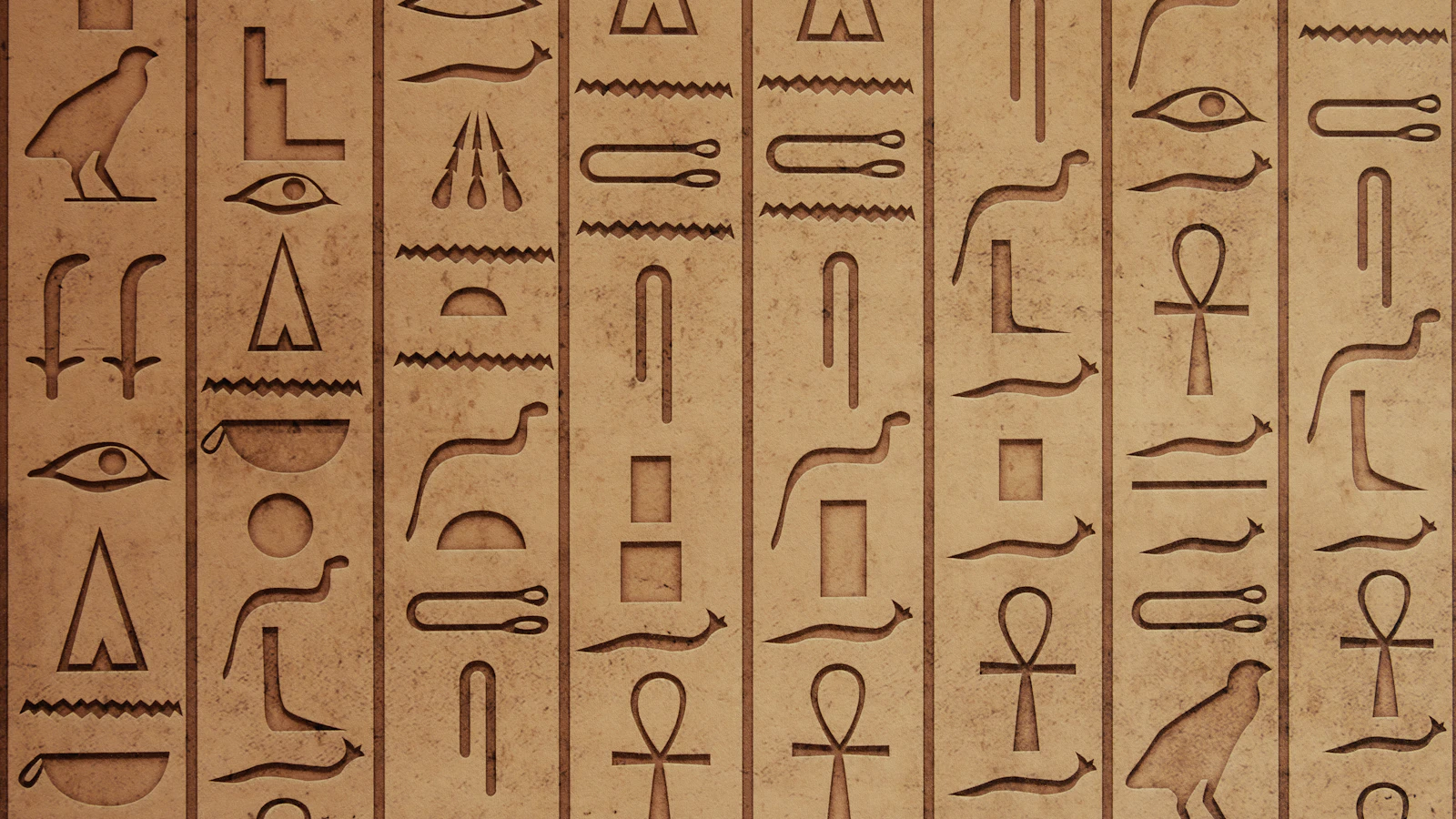
If you want to understand the breakthrough, it helps to know the three types of sign that Champollion found:
- Phonograms stand for one, two, or three consonant sounds, much like letters in an alphabet.
- Logograms (or ideograms) stand for an entire word, for example a sun disc for “sun” or “day”.
- Determinatives are silent signs placed at the end of a word to show its category, such as a walking-legs sign for movement.
Egyptian was usually written without vowels, and could run left to right, right to left, or top to bottom. Readers tell the direction by looking at which way the animals and people face: you read into their faces.
Why the Decipherment Matters
Before 1822, almost everything Europeans knew about ancient Egypt came from Greek and Roman writers and the Bible. After the decipherment, Egypt could speak for itself. Scholars could read royal annals, religious texts, letters, medical papyri, and tomb inscriptions, and build a reliable timeline of the pharaohs. The same technique, comparing a known language with an unknown one, later helped in other decipherments, such as Mesopotamian cuneiform. If you enjoy stories of lost knowledge being recovered, you might also like our article on the House of Wisdom in Baghdad, and our look at how LiDAR is revealing hidden Maya cities. For another ancient world that left no written key, see the pre-Inca civilizations of Peru.
For a concise factual reference on the stone itself, see the entry in Encyclopaedia Britannica.
Common Myths About the Rosetta Stone
- Myth: it is a gateway to secret knowledge. In fact it is a tax and temple decree.
- Myth: it was deciphered overnight. The work took more than two decades of effort by many scholars.
- Myth: the stone alone was enough. It was a vital clue, but Champollion also needed Coptic, other inscriptions such as the Philae obelisk, and his own insight.
- Myth: it is the only trilingual text. Other multilingual inscriptions exist, but this was the right one at the right time.
Frequently Asked Questions
Who deciphered the Rosetta Stone?
Jean-François Champollion is credited with the main decipherment, announced in 1822. Thomas Young made important earlier contributions, especially on the Demotic text and the royal cartouches.
Where is the Rosetta Stone today?
It is on display in the British Museum in London, where it has been since 1802. Egypt has made repeated requests for its return, and the debate continues.
What three languages are on the Rosetta Stone?
The stone carries one text in three scripts: Egyptian hieroglyphs, Demotic, and ancient Greek.
Why was Coptic so important to Champollion?
Coptic is the latest form of the Egyptian language. Because it was still used in church services, Champollion could use it to guess the sounds and meanings of ancient Egyptian words, which let him read names like Ramesses.
Summary
The Rosetta Stone, a priestly decree from 196 BC found by French soldiers in 1799, carried the same text in hieroglyphs, Demotic, and Greek. Thomas Young made the first real progress by identifying cartouches and some sound values. Jean-François Champollion, armed with his knowledge of Coptic, showed in 1822 that hieroglyphs mix sound signs, word signs, and silent determinatives, and he opened the door to reading ancient Egypt’s own voice. It is a reminder that great discoveries usually come from many people, patient comparison, and a little luck.
Note: This article is for general educational purposes. Historical details, dates, and interpretations are based on the cited museum and encyclopaedia sources and may be refined by ongoing scholarship.